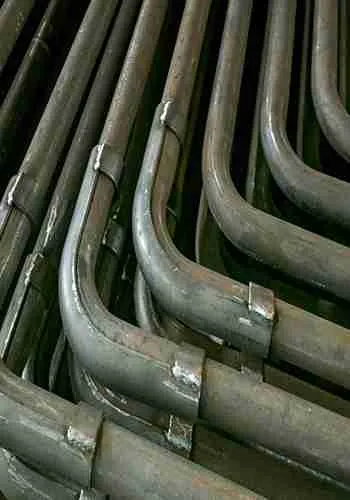
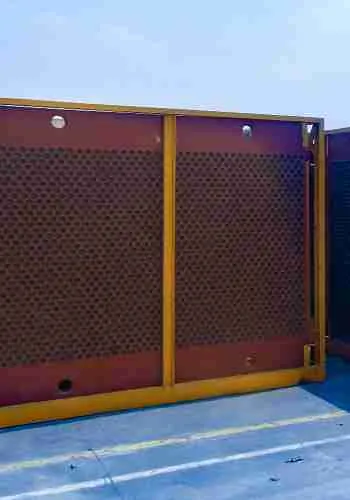
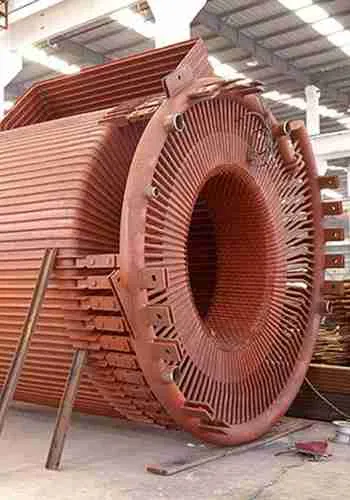
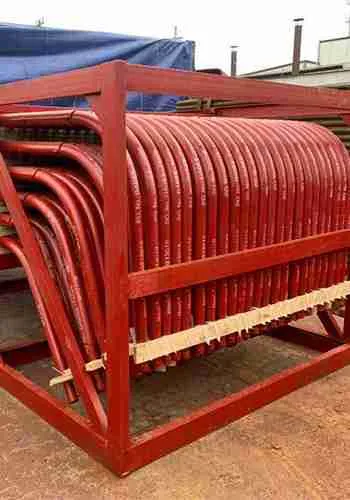
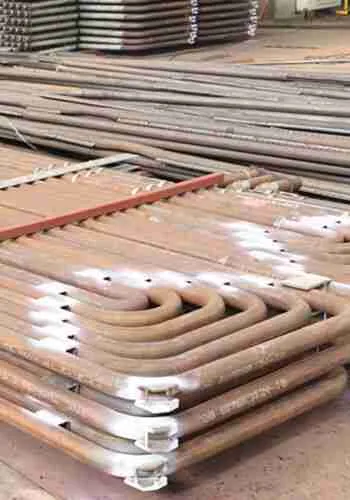
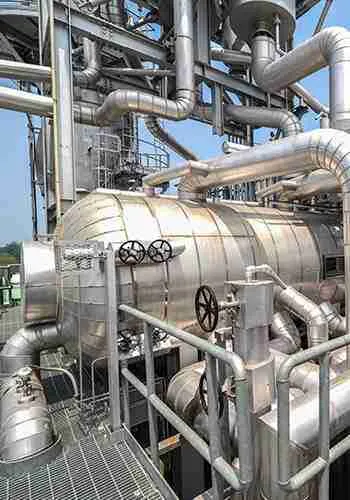
A Heat Recovery Steam Generator (HRSG) is the core heat exchange equipment in Combined Cycle Power Plants (CCPP). Operating strictly through thermal recovery without supplementary firing, an HRSG extracts sensible heat from high-temperature exhaust gas to realize energy reuse. It is widely deployed across power generation, industrial processes, and new energy sectors, serving as critical infrastructure to boost energy efficiency, reduce consumption, and lower carbon emissions. This article provides a concise overview across four key dimensions: working principles, application scenarios, core advantages, and practical operation guidelines.
I. Core Working Principle
An HRSG is a pure heat-exchange device operating without open flames or fuel combustion. High-temperature exhaust gas ($400^\circ\text{C}$–$600^\circ\text{C}$) discharged from a gas turbine passes through sequential heat exchanger sections—the Economizer, Evaporator, and Superheater—to heat feed water into high-temperature, high-pressure steam.
The generated steam can either drive a steam turbine for secondary power generation or directly supply industrial thermal processes, heating, and cooling. This turns waste heat into a usable resource, dramatically elevating overall plant thermal efficiency.
II. Core Application Scenarios
1. Combined Cycle Power Generation (Primary Core Scenario)
Suited for utility-scale gas-fired power plants and distributed captive power stations. While a simple-cycle gas turbine yields an electrical efficiency of only 30%–40%, integrating an HRSG establishes a combined cycle (“Gas Power Generation + Heat Recovery Steam Generation + Steam Power Generation”), raising total plant electrical efficiency to 55%–65%. It is the standard configuration for clean natural gas power generation and thermal plant energy-saving retrofits.
2. Data Center Energy Solutions
Tailored to meet the $24/7$ continuous operational demands of hyperscale compute facilities and AI data centers. Paired with gas turbines, it enables localized power generation to minimize grid transmission losses. Concurrently, the recovered heat powers facility heating and absorption chillers for combined cooling, heating, and power (CCHP), balancing supply reliability with energy efficiency. This serves as a mainstream energy-saving solution for overseas computing hubs.
3. Energy-Intensive Industrial Waste Heat Recovery
Widely used across petrochemical, metallurgical, building materials, and coal chemical industries to capture high-temperature exhaust gas from industrial kilns and process equipment. The generated steam directly supports production heating and plant space heating, or drives small captive turbine generators. This curtails enterprise fuel consumption, slashes production costs, and supports industrial decarbonization targets.
4. District Energy Systems
Deployed in urban developments and industrial park energy stations, forming distributed energy systems when paired with gas turbines. Electricity supplies local demand, while recovered heat provides winter heating, summer lithium-bromide absorption cooling, and process steam. This cascade energy system replaces scattered small boilers, significantly cutting regional energy consumption and pollutant emissions.
5. New Energy & International Power Infrastructure
Broadly applied alongside the expansion of low-carbon natural gas power generation, fitting international grid modernization and manufacturing-adjacent power projects. It adapts flexibly to varied grid load dynamics, enabling gas power plants to achieve low-carbon and high-efficiency upgrades.
III. Core Advantages
High Energy Efficiency: Pure waste heat recovery requires no additional fuel. Compared with simple-cycle gas power generation or traditional coal-fired boilers, overall thermal efficiency increases by over 20%, dramatically cutting energy consumption.
Low-Carbon & Environmentally Friendly: Eliminates direct waste heat dissipation and replaces high-polluting coal-fired equipment. It effectively cuts carbon and sulfur emissions, fully aligning with carbon neutrality mandates.
Broad Adaptability: Easily interfaces with gas turbines of various scales. Supports single-pressure, dual-pressure, and triple-pressure steam cycle configurations to serve power generation, heating, and cooling applications.
Reliable Operation & Low Maintenance: Built without combustion systems, its simple structural design yields low failure rates and reduced operating costs compared to conventional boilers, supporting long-term continuous operation.
Strong Economic Return: In-house energy generation reduces reliance on external power and steam purchases. Equipment retrofit costs are rapidly recouped through lower operational expenditure.
IV. Practical Operational Guidelines
Precise Sizing & Match: Match the pressure rating and layout of the HRSG strictly against upstream exhaust gas temperatures and flow rates. This optimizes heat recovery efficiency and avoids energy wastage caused by mismatched specifications.
Integrated & Intelligent Control: Link the HRSG operation dynamically with the gas turbine, steam turbine, and utility piping networks. Adjust operating parameters dynamically based on power and thermal load demands to achieve optimal energy cascading.
Routine Anti-Corrosion & Anti-Fouling Maintenance: Particulates in exhaust gas can cause ash accumulation and tube corrosion, impairing heat transfer. Regular washing and maintenance schedules are essential to sustain thermal efficiency and extend service life.
Refined Load Management: Optimize operational modes during low-load periods to prevent waste heat loss; strictly monitor temperature and pressure parameters during high-load periods to maintain safe and stable operation.