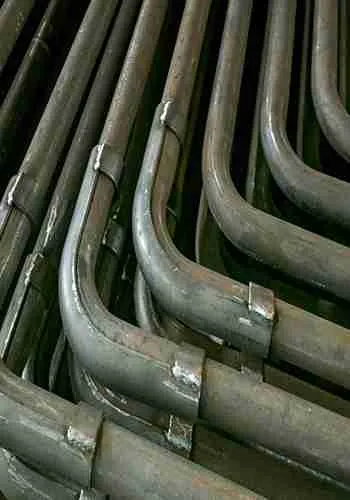
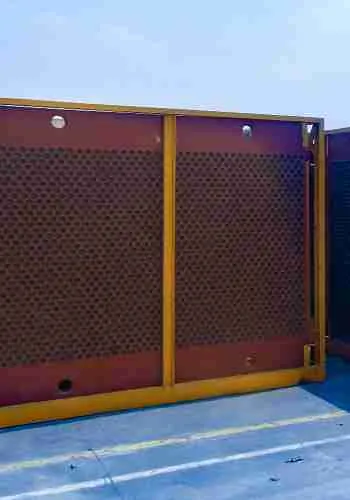
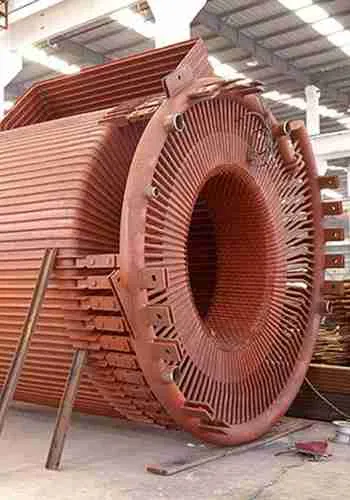
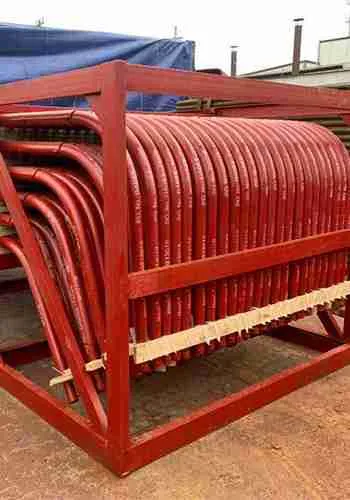
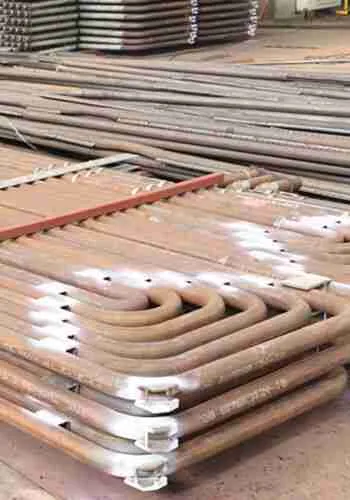
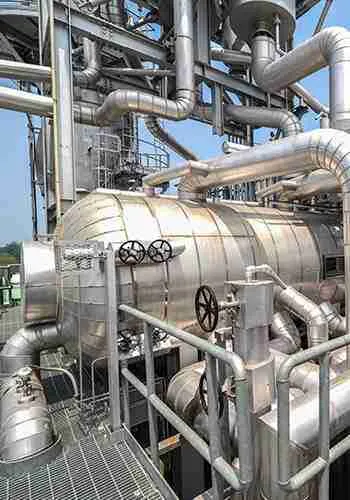
The water-cooled air chamber is a core supporting component of circulating fluidized bed (CFB) boilers. Different from conventional insulated air chambers, its water-cooled structural design fundamentally addresses various operational drawbacks of traditional air chambers under high-temperature conditions. It delivers great practical value for the long-term stable, safe and economical operation of boilers. Its key practical benefits are summarized in four aspects as follows:
1. Uniform Air Distribution to Ensure Stable Furnace Combustion
The water-cooled air chamber distributes primary air precisely and evenly, effectively eliminating uneven air distribution and large local air deviation commonly seen in conventional air chambers. Uniform air distribution enables full fluidization of bed materials inside the furnace, preventing failures such as local coking and dead fluidization zones. It maintains balanced and stable combustion conditions, greatly lowering operational risks including boiler load fluctuation, unstable combustion and flameout. It adapts to boiler load regulation at high and low loads and improves unit operational stability.
2. Reduced Thermal Stress to Prevent High-Temperature Deformation and Equipment Damage
During boiler operation, the furnace bottom reaches extremely high temperatures. Conventional air-cooled or insulated air chambers are continuously exposed to intense thermal radiation, which induces massive thermal stress and leads to shell deformation, cracking and weld leakage. With continuous heat exchange via water circulation, the water-cooled air chamber rapidly removes heat absorbed by the chamber body, significantly reducing overall thermal stress and restraining high-temperature deformation. It fundamentally minimizes cracking damage on the air chamber shell and duct connections, greatly extending service life and cutting the frequency of equipment shutdowns caused by faults.
3. Wear Resistance and Slag Leakage Prevention to Reduce O&M Costs
In CFB boiler operation, fine bed material and slag bring risks of erosion and leakage. Traditional air chambers have poor wear resistance and tend to suffer erosion perforation, slag and air leakage under long-term scouring. This contaminates the equipment environment, causes air loss and reduces combustion efficiency. Featuring a compact structure, high shell strength and wear-resistant protection, the water-cooled air chamber offers outstanding scouring and wear resistance. It effectively prevents slag and air leakage, maintains air chamber tightness and reduces air waste. Meanwhile, it substantially cuts O&M and labor costs for routine inspection, repair welding and component replacement.
4. Optimized Unit Conditions to Improve Operational Economy and Safety
On one hand, the water-cooled structure stabilizes temperatures of the air chamber and furnace bottom, optimizes the overall heat exchange performance of the boiler, improves fuel combustion efficiency, reduces coal consumption and enhances economic indicators of the unit. On the other hand, it avoids safety hazards triggered by high-temperature deformation, slag leakage-induced fire and unbalanced air volume. It helps prevent unplanned shutdowns and guarantees long-period, continuous, safe and stable operation of CFB boilers, providing core support for continuous industrial production and heat supply.
Conclusion
The application of water-cooled air chambers mainly solves the industry pain points of conventional air chambers: vulnerable to damage under high temperature, uneven air distribution, prone to slag leakage and unstable working conditions. It balances four core values: operational safety, equipment durability, stable working conditions and energy saving. It serves as an essential guarantee component for efficient and long-term operation of modern CFB boilers.