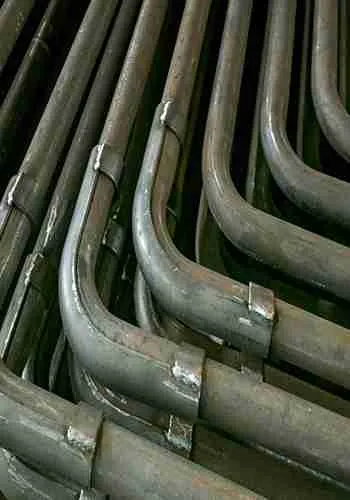
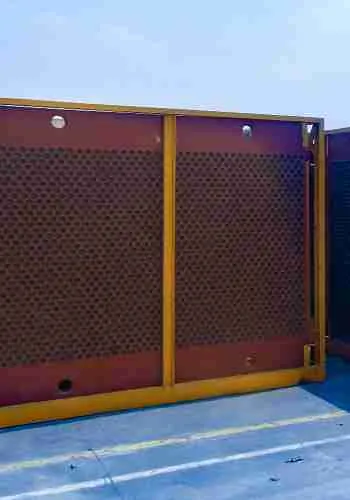
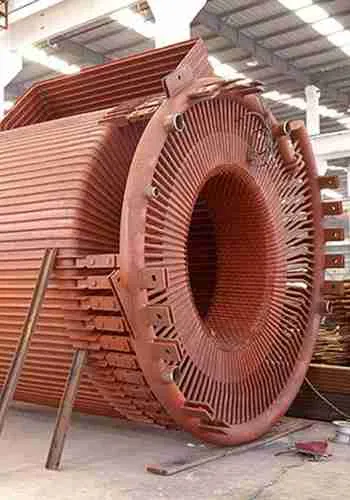
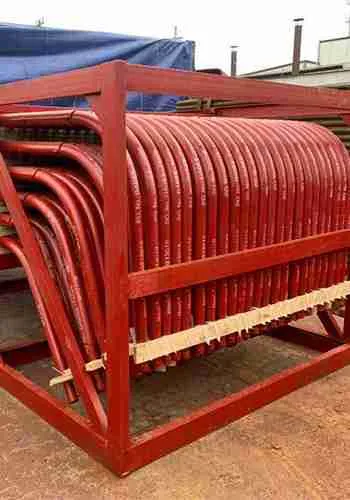
The core principle of a Heat Recovery Steam Generator (HRSG) is to recover high-temperature waste flue gas heat from equipment such as gas turbines, industrial kilns, and engines. Without needing supplementary firing, it produces steam or hot water to achieve waste heat resource utilization. Featuring benefits such as energy savings, carbon reduction, improved energy efficiency, and lower operation and maintenance (O&M) costs, HRSGs are widely applied in fields like power generation, chemicals, heavy industry, environmental protection, and marine/specialized propulsion, serving as core equipment for industrial waste heat recovery and clean energy integration.
The practical application scenarios are detailed below:
1. Combined Cycle Power Plants (CCPP) (Primary & Mainstream Scenario)
Widely used in large-scale grid power stations and industrial park distributed energy power plants. Gas turbines alone convert only about 40% of fuel energy into electricity, leaving exhaust gas temperatures at 500–600°C, which results in significant energy loss. Positioned at the exhaust end of the gas turbine, the HRSG recovers this waste heat to produce multi-pressure (high, medium, and low) steam to drive a steam turbine for secondary power generation, forming a Combined Cycle Power Plant (CCPP) system.
Characteristics: This scenario predominantly uses dual-pressure or triple-pressure reheat HRSGs for cascade heat recovery, pushing the overall power plant thermal efficiency above 58%.
Scope: It is standard equipment for modern gas-fired power plants and thermal power energy-saving retrofits. Different sizing configurations accommodate both major base-load utility plants and localized distributed power supply systems.
2. Industrial Combined Heat and Power (CHP)
Tailored for industries requiring continuous industrial steam, such as chemicals, papermaking, textiles, and food processing. By utilizing the exhaust heat from on-site gas turbine generator sets, the HRSG produces process steam to replace traditional coal-fired or oil-fired boilers, achieving integrated power generation and steam supply (“cogeneration”).
Operational Flexibility: The unit operates dynamically to adjust steam output based on real-time production loads, fitting continuous industrial manufacturing.
Efficiency: Compared to traditional independent power and steam generation modes, the overall energy utilization rate exceeds 80%. It meets factory production steam and heating demands, while excess electricity can be fed into the power grid, making it key equipment for corporate green energy-saving retrofits.
3. Petrochemical and Oil Refining Industry
During petrochemical, coal chemical, and fine chemical operations, equipment like heating furnaces, cracking furnaces, and gas turbines continuously emit high-temperature process flue gas. The HRSG efficiently recovers this waste heat, producing high-pressure steam that can be used for crude distillation, catalytic cracking, hydroprocessing, or driving steam turbines and pumps to enable energy recycling across the facility.
Specialized Design: Corrosion-resistant, specialized HRSGs are deployed in these scenarios to withstand flue gas impurities and temperature fluctuations.
Value: It effectively reduces energy consumption in refining units and significantly boosts operational economic performance across petrochemical complexes.
4. Heavy Industry and Metallurgy Waste Heat Recovery
Targeting heavy industries such as steel, metallurgy, cement, and ceramics, HRSGs recover medium- to high-temperature dust-laden flue gas waste heat from blast furnaces, sintering machines, and rotary kilns, converting it into steam and electricity to match high-load, continuous production demands.
Structural Fit: Horizontal HRSGs are often used to accommodate high flue gas volumes and heavy dust conditions, effectively preventing ash accumulation and clogging.
Benefits: The generated steam is utilized for plant heating, equipment drive power, or power generation, substantially reducing carbon emissions and production costs in heavy industry.
5. Waste-to-Energy (WTE) and Solid Waste Treatment
Serves as the core heat exchange equipment for municipal solid waste (MSW) incineration, industrial solid waste disposal, and biomass power generation projects. By recovering high-temperature flue gas waste heat generated during waste incineration, the HRSG generates steam to drive generator sets for energy recovery or provide heating for plant operations and residue drying.
Durability: Units undergo anti-corrosion and anti-wear engineering to withstand the high dust levels and severe corrosiveness of incineration flue gases.
Impact: Enhances energy utilization efficiency in solid waste projects, supporting the harmless, reduced, and resource-oriented disposal of solid waste.
6. District Heating and Public Utility Infrastructure
Integrated into urban gas-fired power stations and industrial park energy hubs, the HRSG system recovers exhaust heat from power generation equipment to produce hot water or low-pressure steam. This heat is distributed through piping networks to provide centralized heating and domestic hot water for residential areas, commercial buildings, and industrial parks. Combined with absorption chillers, it can also provide centralized cooling (CCHP).
Low-Carbon Supply: The entire system requires no extra fuel consumption, delivering clean, low-carbon, and stable thermal energy—making it an essential component of urban low-carbon energy systems and industrial park energy infrastructures.
7. Marine and Offshore Specialized Propulsion
Applied in ocean-going vessels, offshore drilling platforms, and offshore power stations to recover high-temperature exhaust heat from main engines and generator sets. Compact, lightweight vertical HRSGs are utilized for their small footprint and anti-sway capabilities, fitting the tight spatial constraints of offshore environments.
Operational Savings: Recovered steam powers freshwater distillation units, equipment space heating, and auxiliary power generation. This significantly reduces fuel consumption for offshore vessels and improves energy self-sufficiency for marine engineering platforms.
8. LNG Power Plants and Unconventional Gas Energy Applications
Suited for unconventional gas power projects such as LNG regasification, coalbed methane (CBM), and blast furnace gas (BFG). Because these gases offer stable heating values and steady exhaust conditions, pairing them with multi-pressure HRSGs enables efficient cascade heat recovery.
Energy Optimization: Maximizes energy extraction to satisfy the differentiated energy needs of distributed clean energy power stations and captive industrial power plants.