Abstract
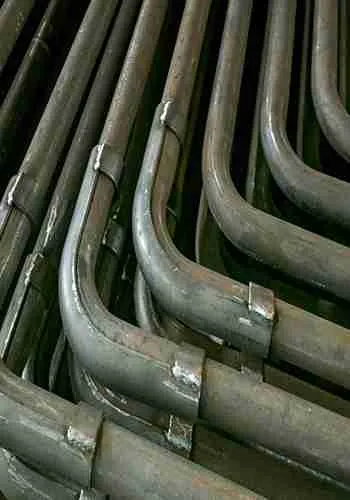
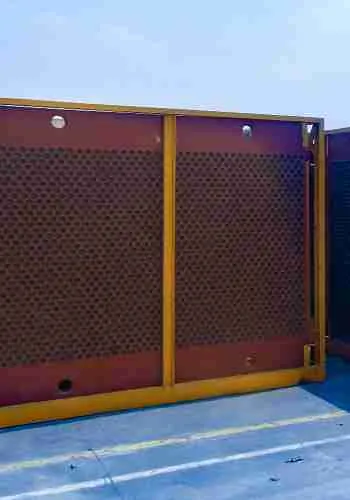
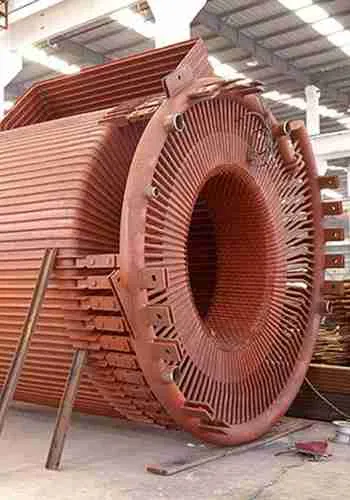
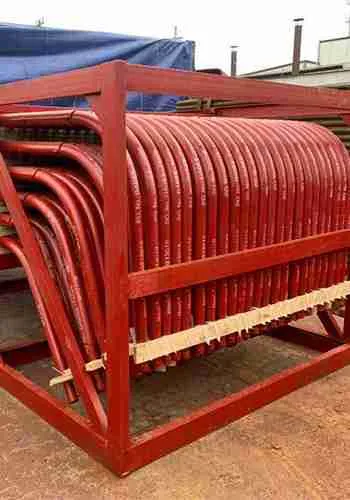
The water-cooled air chamber of a boiler is a core pressure-bearing and ventilation component of circulating fluidized bed (CFB) boilers and coal-fired boilers. Operating under harsh conditions of high temperature, heavy dust and high-velocity gas flow erosion, it frequently suffers from wall plate wear, local thickness reduction and perforation leakage. These faults directly threaten the ventilation stability, operational safety and service life of the boiler, while frequent shutdown maintenance leads to substantial economic losses. Combined with the practical operation of utility boilers, this paper systematically analyzes the wear types, formation mechanisms and influencing factors of water-cooled air chambers, and compares the limitations of conventional anti-wear repair technologies. It focuses on elaborating the process principle, core advantages, on-site construction procedures and engineering application effects of laser cladding repair. Engineering practice shows that laser cladding can achieve low dilution rate and high-strength metallurgical bonding. The cladding layer has excellent wear resistance, high-temperature resistance and impact resistance, which can effectively address severe wear of water-cooled air chambers and greatly extend boiler operation cycles. It provides reliable technical references for anti-wear repair of boiler water-cooled air chambers and similar heating surface components.
0 Introduction
As a key connecting structure between the boiler air supply system and furnace combustion system, the water-cooled air chamber is responsible for uniform primary air distribution, bed material support and furnace sealing. Meanwhile, its water-cooled structure realizes temperature reduction and pressure bearing. During long-term boiler operation, the air chamber is continuously swept by high-velocity dust-laden flue gas and bed material particles. Under the coupled effects of gas flow erosion, particle impact and temperature alternation, uneven wear readily occurs on the air chamber wall plates, weld zones and flow-guiding structures. After prolonged operation, faults including excessive wall thickness reduction, local pits and perforated air leakage will occur, triggering a series of problems such as insufficient boiler wind pressure, unstable combustion and decreased thermal efficiency. In severe cases, unplanned shutdown accidents may take place.
Conventional repair methods include arc spraying, manual arc welding and patch plate welding. These technologies have drawbacks such as weak coating bonding force, high porosity, large heat-affected zone and poor wear resistance. Repaired components have short service lives, and repeated repairs raise operation and maintenance costs. As an innovative surface modification and repair technology, laser cladding features concentrated heat input, low dilution rate, reliable metallurgical bonding and superior coating performance. It has gradually replaced traditional processes and become a core repair technology for boiler components subjected to high-temperature wear. Based on on-site equipment failure cases, this paper deeply analyzes the wear mechanism of water-cooled air chambers and introduces the complete construction process and application effects of laser cladding, so as to provide practical support for anti-wear repair of industrial boilers.
1 Analysis on Wear Mechanism of Boiler Water-Cooled Air Chamber
1.1 Main Wear Types
Under the operating conditions of circulating fluidized bed boilers and coal-fired boilers, the wear of water-cooled air chambers is dominated by erosive wear, accompanied by abrasive wear, fatigue wear and partial high-temperature oxidative wear. Mutual coupling of these wear modes accelerates equipment failure.
First, erosive wear. During boiler operation, primary air carries large quantities of bed material and fly ash particles and flows through the water-cooled air chamber at high speed. Particles strike and scour the air chamber wall plates at certain angles, causing cutting and impact spalling on metal surfaces. This serves as the primary cause of air chamber wear. Air chamber corners, duct transition sections and areas around flow guide plates are prone to gas flow vortexes, where particle scouring intensity rises sharply and forms high-risk wear zones.
Second, abrasive wear. Hard particles in flue gas and bed materials continuously rub against the metal surface of the air chamber, inducing plastic deformation and micro scratches on the metal surface at the microscopic level. Cumulative long-term action leads to spalling of the surface material and uniform thickness reduction of wall plates. Compared with erosive wear, abrasive wear progresses slowly but covers a wide range, resulting in overall wall thickness attenuation of the air chamber.
Third, coupled fatigue wear and high-temperature wear. Frequent boiler start-stop operations and load adjustment cause temperature alternation of air chamber wall plates, generating thermal fatigue stress and microcracks on the metal surface. Meanwhile, slight oxidation occurs on metal surfaces under high-temperature conditions. The formed oxide layer has low hardness and tends to peel off. Under particle scouring, cracks propagate and oxide layers fall off, accelerating wear failure.
1.2 Core Causes and Mechanism of Wear
(1) Influence of gas flow and particle flow characteristics. Non-uniform flow fields exist inside the water-cooled air chamber. The central region features high flow velocity and high particle concentration, while stagnant vortexes tend to form near wall regions, greatly increasing the frequency of particle impact on wall plates. In addition, fluctuation of primary air velocity and unstable furnace pressure aggravate disordered particle scouring and sharply raise local wear rates. The typical core-annulus flow structure of CFB boilers forms a high-concentration descending material flow near the wall, further intensifying scouring wear on air chamber wall surfaces.
(2) Influence of particle parameters. The particle size of fly ash and bed materials generated from coal combustion ranges from 10 to 200 μm. These particles have high hardness and large impact energy. Larger particle size and higher flow velocity bring stronger impact damage to metal walls. Particle incidence angle determines wear modes: acute-angle incidence mainly causes cutting wear, while normal incidence leads to impact spalling wear. Alternating scouring at multiple angles significantly increases wear efficiency.
(3) Equipment structural and process defects. Structural mutation zones such as welds of water-cooled air chambers, junctions with refractory materials and installation gaps of flow guide plates change gas flow directions and generate local turbulence, resulting in particle accumulation and concentrated scouring. Excessively large ledge size and unreasonable flow guide structure in original equipment design further aggravate local vortex wear. In addition, matrix corrosion and minor defects formed during long-term operation act as wear initiation points and accelerate material failure.
(4) Operating condition factors. Long-term boiler operation under high load, unreasonable air distribution and coal quality fluctuation (excessively high ash content and abundant hard impurities) increase scouring intensity of dust-laden gas flow. Temperature alternating stress induced by frequent start-stop weakens the performance of metal matrix and reduces its wear and impact resistance, forming a vicious cycle of “wear – crack – aggravated wear”.
1.3 Limitations of Conventional Repair Technologies
Current conventional anti-wear repair technologies for water-cooled air chambers have obvious drawbacks and cannot meet long-term operation requirements. First, arc spraying: coatings have high porosity and low bonding strength, relying merely on physical adhesion. Coatings are easy to peel off under high-temperature high-velocity scouring, with a service life of only 3 to 6 months. Second, manual arc welding: large heat input creates wide heat-affected zones on the matrix, easily causing deformation, cracks and residual stress. The cladding layer has high dilution rate and unstable wear resistance. Third, patch plate welding: it can only temporarily seal damaged areas without improving overall wear resistance. Gaps between patch plates and the matrix tend to accumulate ash and aggravate wear, leading to rapid subsequent failure. Overall, conventional processes suffer from poor repair quality, short service life and high rework rate, failing to adapt to the harsh operating conditions of water-cooled air chambers.
2 Principle and Core Advantages of Laser Cladding Repair Technology
2.1 Technical Principle
Laser cladding is a high-precision surface metallurgical modification technology. Taking a high-energy density laser beam as heat source, it simultaneously melts special wear-resistant alloy powder and the surface layer of worn equipment matrix. After rapid melting and self-quenching solidification, an alloy wear-resistant layer with low dilution rate and high strength and excellent performance is formed on the matrix surface. The cladding layer achieves complete metallurgical bonding with the matrix without physical gaps. Meanwhile, laser parameters and alloy ratio can be adjusted to precisely control cladding thickness, hardness and microstructure to adapt to high-temperature, wear-resistant and impact-resistant operating requirements of boilers.
2.2 Core Technical Advantages
Compared with conventional repair processes, laser cladding applied to water-cooled air chamber repair has prominent advantages. First, reliable bonding performance: metallurgical bonding is realized with bonding strength far higher than spraying processes, eliminating peeling and flaking risks. Second, precisely controllable heat input: laser energy is concentrated and acts on a small area, creating an extremely narrow heat-affected zone on the matrix. It avoids wall plate deformation and cracks of water-cooled air chambers and effectively protects the structural performance of the matrix. Third, extremely low dilution rate, controllable within 5%, which maximally retains the excellent performance of wear-resistant alloys and prevents performance attenuation caused by dilution of matrix material. Fourth, superior cladding layer performance: the cladding layer has dense microstructure without pores and uniform hardness, featuring outstanding wear resistance, high-temperature resistance, impact resistance and oxidation resistance. Fifth, high repair precision: local worn pits and thickness-reduction zones can be repaired accurately without large-area welding, with high construction efficiency and low rework rate.
3 On-Site Construction Process of Laser Cladding
3.1 Pre-construction Preparation
First, carry out equipment shutdown inspection and condition detection. The boiler shall be fully shut down for cooling and pressure relief. Ash and slag inside the water-cooled air chamber shall be thoroughly cleaned. A comprehensive inspection of wall plate wear zones is performed. Wall thickness at each position is measured by thickness gauges to mark areas with excessive wear, local pits and crack defects, and define the repair scope and cladding thickness. Second, conduct surface pretreatment. Sandblasting or grinding is adopted to remove oxide scale, rust and oil stains on repair surfaces, ensuring clean matrix surfaces with uniform roughness to prevent impurities from impairing bonding performance of cladding layers. Third, select wear-resistant alloy powder according to operating conditions. Nickel-based and iron-based high-temperature wear-resistant alloy powders are preferred to adapt to boiler high-temperature wear conditions. Meanwhile, debug laser cladding equipment and calibrate core parameters including laser power, scanning speed and powder feeding rate.
3.2 Core Construction Procedures
(1) Defect pretreatment. Grind and root clean deep pits and crack zones formed by wear to eliminate stress concentration areas and guarantee flat matrix surfaces, avoiding internal defects after cladding.
(2) Parameter debugging. Combined with the matrix material of water-cooled air chambers (Q235, 20# steel, etc.) and repair thickness, optimal process parameters are determined: laser power 1800~2500 W, scanning speed 8~12 mm/s, powder feeding rate 15~25 g/min, single-layer cladding thickness 0.8~1.2 mm, and dilution rate controlled at 3%~5%.
(3) Layered cladding repair. Adopt partitioned, layered and staggered cladding on marked wear zones to avoid local stress concentration caused by excessive single heat input. Repair deep pits and severely thinned areas first, then perform uniform cladding and levelling to ensure uniform wall thickness and smooth surface after repair.
(4) Post-cladding heat treatment and grinding. After cladding, the repaired area is subject to constant-temperature slow cooling to eliminate welding residual stress and prevent cold cracks. Then overall grinding and levelling are carried out to remove surface burrs and protrusions, ensuring smooth flow field inside the air chamber and reducing gas flow vortexes.
3.3 Quality Inspection and Acceptance
Comprehensive quality inspection shall be performed after construction. Ultrasonic testing and penetrant testing are used to inspect the interior of cladding layers to ensure no cracks, pores, slag inclusions and other defects. Hardness tests are conducted on cladding layers to verify uniform hardness meeting wear resistance requirements. Wall thickness gauges are used to recheck repaired wall thickness to meet acceptance criteria. Final inspection on surface flatness is performed to ensure no protrusions or depressions, complying with equipment operation requirements.
4 Engineering Application Practice and Effect Analysis
4.1 Project Overview
A 300 MW circulating fluidized bed boiler in a power plant suffered extensive wear of its water-cooled air chamber after 5 years of operation. The wall plates around air chamber corners and flow guide plates had an average thickness reduction of 2~4 mm, with local pit wear. Air leakage and unstable wind pressure occurred repeatedly. Arc spraying and manual cladding were adopted successively for repair, but wear failure reoccurred within 3 to 8 months at the shortest and longest respectively. Frequent shutdown maintenance seriously affected power generation efficiency of the unit. Targeting this equipment wear problem, laser cladding technology was applied for overall repair and protection of all wear zones.
4.2 Verification of Application Effects
(1) Structural performance. After laser cladding repair, the wall thickness of the water-cooled air chamber reached the standard uniformly. The cladding layer was tightly bonded with the matrix without cracks, peeling or deformation defects. The overall structural strength and stability of the equipment were greatly improved. Local air leakage and wind pressure fluctuation were completely eliminated, boiler combustion conditions became stable and thermal efficiency was significantly enhanced.
(2) Wear resistance and durability. Two shutdown inspections were conducted after 12 months and 24 months of continuous unit operation. The laser cladding layer remained intact without obvious wear, spalling or oxidative corrosion, and no remarkable wall thickness attenuation was detected. Compared with the service life of 3~8 months of conventional repair processes, the service life after laser cladding repair was increased by more than 3 times, demonstrating remarkable long-term anti-wear performance.
(3) Economic and operation benefits. The one-time repair qualification rate of laser cladding reached 100%, eliminating frequent rework and greatly reducing shutdown maintenance frequency and operation costs. Meanwhile, improved equipment operational stability raised boiler thermal efficiency by 1.5%~2%, cutting coal consumption and equipment loss, with prominent comprehensive economic benefits.
5 Operation and Maintenance Optimization Suggestions
To further extend the service life of water-cooled air chambers, combined with wear mechanism and laser cladding characteristics, supporting optimization measures are proposed. First, optimize boiler operating conditions. Reasonably regulate primary air velocity and air volume, stabilize furnace pressure to reduce gas flow vortexes and disordered particle scouring. Control coal quality of incoming fuel and lower ash content and hard impurities in coal to mitigate particle wear from the source. Second, optimize equipment structure. Install small flow guide plates in vortex scouring zones of air chambers to reduce local turbulence intensity, optimize refractory ledge structure and minimize scouring risks induced by structural mutation. Third, establish a regular inspection mechanism. Periodically measure wall thickness of air chambers and inspect surface defects. Timely pre-treat minor wear areas to prevent wear deterioration. Avoid frequent boiler start-stop operations to reduce fatigue damage to matrix and cladding layers caused by temperature alternating stress.
6 Conclusions
Wear of boiler water-cooled air chambers results from coupling effects of flow field characteristics, particle scouring, structural defects and operating conditions. Synergistic action of erosive wear, abrasive wear and thermal fatigue wear constitutes the core mechanism of equipment failure. Conventional repair processes have shortcomings such as weak bonding force, large heat impact and poor durability, failing to achieve long-term protection. Laser cladding repair technology features low dilution rate, reliable metallurgical bonding, small heat-affected zone and excellent wear resistance. It can accurately solve various wear defects of water-cooled air chambers, greatly improving operational stability and durability of repaired equipment and reducing equipment maintenance costs and shutdown losses.
Engineering practice proves that laser cladding is suitable for the harsh high-temperature, heavy dust and scouring operating conditions of boiler water-cooled air chambers. It delivers reliable repair quality and long service life. As a high-efficiency repair and long-term anti-wear technical solution for boiler heating surface components, it holds high engineering promotion and application value.