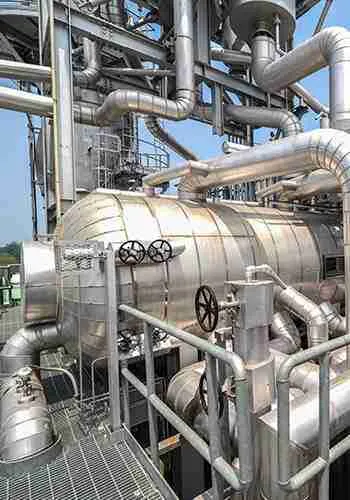
The boiler superheater is a core component of modern steam boilers. Its primary function is to heat saturated steam to a temperature exceeding its saturation point, a process crucial for improving the thermal efficiency of the entire steam power cycle. Based on the heat transfer method, placement within the boiler, and structural characteristics, boiler superheaters are mainly classified into convection superheaters, radiant superheaters, and semi-radiant superheaters (also known as platen superheaters). This article will provide an in-depth analysis of the characteristics, working principles, and application scenarios of these three superheater types, with a special focus on the technical details of platen superheaters.
Understanding Boiler Superheater Designs: Convection, Radiant and Platen Comparison
1. Convection Superheater
A convection superheater is located in the boiler’s convection pass and primarily absorbs heat through convective heat transfer from the flue gas.
- Placement and Heat Transfer Principle: It is positioned in the convection pass following the furnace outlet. Here, the flue gas temperature has decreased somewhat, but the gas flows at a relatively high velocity across the superheater tube bundles. Heat is transferred primarily via convection. In a convection superheater, convective heat transfer accounts for approximately 60% to 80% of the total heat absorption.
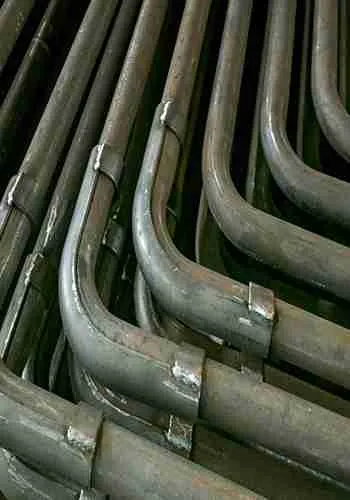
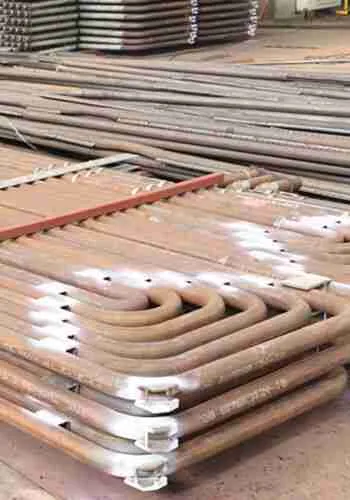
- Structural Characteristics: It typically consists of parallel-connected serpentine tubes welded to inlet and outlet headers. The serpentine tubes are usually bent from seamless steel tubes, with outer diameters typically ranging from 32 to 42 mm. Based on their orientation, they can be classified as vertical or horizontal.
- Application Scenarios: Due to their relatively simple structure, cost-effectiveness, and high reliability, they are widely used in boilers of various capacities. They often serve as the primary superheater component in small industrial boilers. In large utility boilers, they are commonly used as the low-temperature superheater.
2. Radiant Superheater
A radiant superheater is placed within the furnace and absorbs heat primarily through radiant heat transfer.
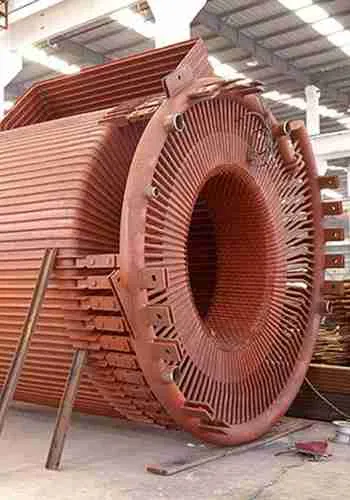
- Placement and Heat Transfer Principle: It is located inside the furnace, for example, on the furnace roof (roof superheater) or on the furnace walls (wall superheater), where it is directly exposed to the high-temperature flame. It primarily absorbs radiant heat from the furnace flame and hot gases to heat the steam.
- Structural Characteristics: As it operates directly in the high-temperature furnace environment, conditions are severe, and tube wall temperatures are high. Consequently, material requirements are extremely stringent, necessitating the use of high-quality, heat-resistant steels such as low-carbon steel, chromium-molybdenum alloy steel, or even austenitic chromium-nickel stainless steel.
- Application Scenarios: To withstand high heat loads, radiant superheaters are typically employed in high-pressure or ultra-high-pressure boilers. In many large-capacity utility boilers, wall superheaters or roof superheaters are common design features.
3. Semi-Radiant Superheater (Platen Superheater)
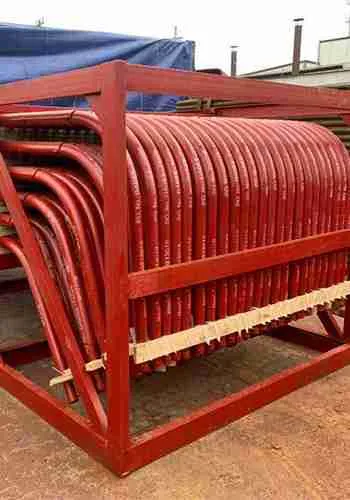
The Platen Superheater is a typical semi-radiant superheater. It is arranged in the form of tube panels (platens) in the upper part of the furnace or at the furnace outlet, absorbing both radiant and convective heat.
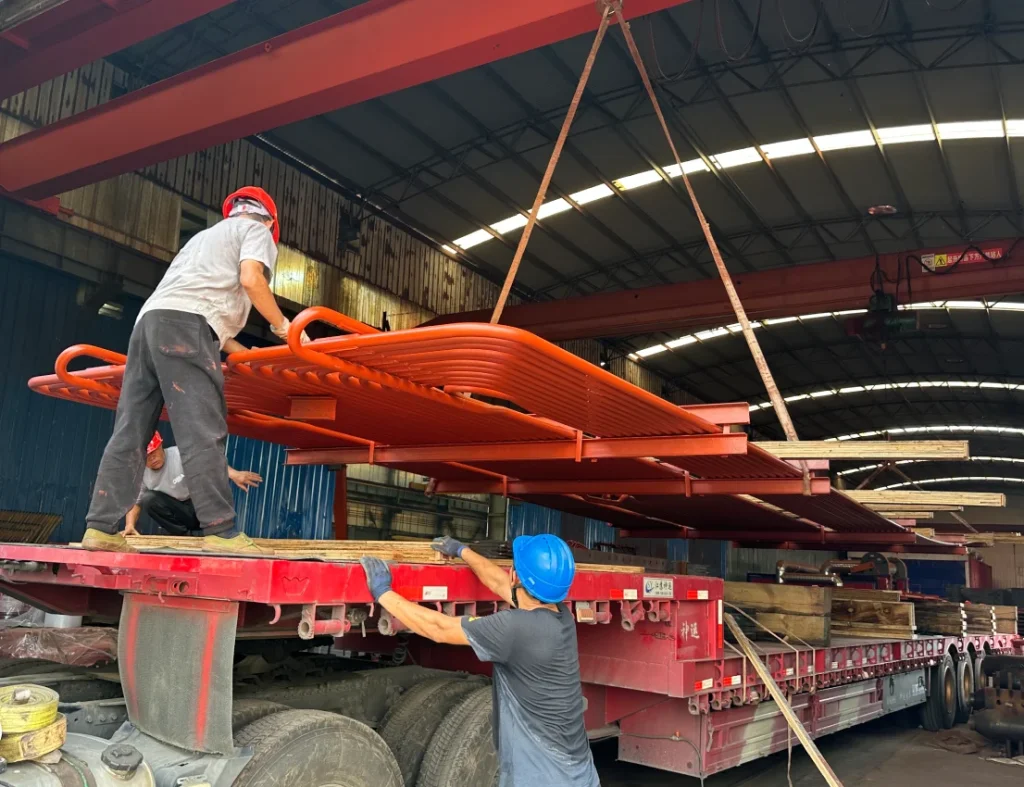
- Placement and Heat Transfer Principle: The platen superheater is located in the upper furnace or at the furnace exit (gas uptake). This strategic placement allows it to receive direct radiant heat from the furnace flame while also absorbing convective heat from the flue gases flowing between the platens. Its heat absorption is a mix of radiation and convection, with radiant heat transfer typically accounting for about half of the total absorption.
- Structural Characteristics:
- The platen superheater consists of multiple tube panels (platens), each comprising several (e.g., 15-30) steel tubes with an outer diameter of 32-42 mm.
- The platens are spaced relatively far apart (a pitch typically between 500-1000mm). This helps lower the furnace exit gas temperature, preventing slagging on the heating surfaces located behind it (such as convection superheaters).
- Based on structural configuration, platen superheaters are mainly categorized as vertical, horizontal, and drainable vertical types, each with its own advantages and disadvantages regarding support and drainage.
- Application Scenarios: Platen superheaters are a fundamental component of the superheater surfaces in modern large utility boilers. For instance, they form a vital part of the superheater system in models like the DG3000/26.15-Ⅱ1 ultra-supercritical boiler. They are suitable for high-temperature, high-pressure environments and contribute to effective steam temperature control.
Comparison Summary and Application Selection
To help you intuitively understand the differences between the three superheater types, the table below summarizes their key characteristics:
| Feature | Convection Superheater | Radiant Superheater | Semi-Radiant Superheater (Platen) |
|---|---|---|---|
| Primary Heat Transfer Mode | Primarily Convection | Primarily Radiation | Combination of Radiation & Convection |
| Placement Location | Convection Pass | Inside the Furnace (e.g., walls, roof) | Upper Furnace / Furnace Outlet |
| Steam Temperature Characteristic | Steam outlet temperature typically increases with increasing load. | Steam outlet temperature relatively decreases or changes less with increasing load. | Temperature characteristic is intermediate; relatively stable. |
| Structural Complexity | Relatively Simple | Compact structure, but demands high-quality materials. | Structurally more complex; requires consideration of panel support and thermal expansion. |
| Primary Application | Boilers of various capacities, common especially in small/medium boilers. | High-Pressure, Ultra-High-Pressure Boilers | Modern Large Utility Boilers |
In practical boiler design, it’s common to use a combination of superheater types rather than relying on a single one. To maintain a stable final steam temperature despite variations in boiler load, fuel type, or combustion conditions – while also balancing economy, reliability, and flexibility – modern large boilers (especially utility boilers) often combine radiant, semi-radiant, and convection superheaters. A typical arrangement involves placing platen superheaters in the upper furnace and convection superheaters in the convection pass, forming a radiant-convective superheater system.
In-Depth Analysis of Platen Superheaters
Definition and Core Functions of the Platen Superheater
As mentioned, the Platen Superheater is a heating surface located in the upper furnace or at the furnace exit, absorbing both direct furnace radiation and flue gas convection. Its core functions are:
- Absorb Heat and Heat Steam: As a vital part of the superheater system, it is responsible for heating the steam to the required superheat temperature.
- Reduce Furnace Exit Gas Temperature: The significant spacing between platens effectively lowers the flue gas temperature at the furnace exit to an acceptable range, preventing slagging on downstream convection heating surfaces (e.g., high-temperature superheaters, reheaters) caused by excessive temperatures.
Key Parameters of Platen Superheater Tubes
The design of platen superheaters involves several key parameters:
- Tube Specification: Tubes with an outer diameter of 32~42mm are typically used.
- Panel Composition: Each platen consists of 15~30 tubes, with the exact number determined by the design steam velocity requirements.
- Pitch Design: The pitch between platens (s1) is generally 500~1000mm; the ratio of the transverse pitch between tubes within a platen (s2) to the tube outer diameter (d), s2/d, usually falls within the range of 1.1~1.25.
Technological Development and Innovation
As boiler technology advances towards higher parameters and larger capacities (e.g., ultra-supercritical), the performance requirements for radiant heating surfaces like platen superheaters continue to increase. Recent R&D focuses on addressing challenges related to heating surface temperature distribution uniformity, manufacturing difficulties, and operational safety.
For example, new patented technologies for radiant heat exchange structures, utilizing methods like symmetrically arranged hybrid headers for platen superheaters, aim to achieve more uniform heat absorption across the heating surface, reduce temperature deviation, thereby easing manufacturing challenges, improving unit efficiency, and ensuring operational safety. This reflects the ongoing optimization and development in platen superheater technology.
Why Global Customers Choose DHB Boiler’s Superheaters
At DHB, we provide more than just products; we deliver customized solutions based on profound experience and a commitment to quality throughout the project lifecycle.
- Materials Science Expertise: We maintain strategic partnerships with globally renowned steel suppliers, ensuring reliable material sources and providing complete Material Test Certificates (MTC).
- Design and Manufacturing Strength: Our manufacturing systems hold international certifications like ASME and ISO 3834. We combine automated production lines with a team of seasoned engineers to precisely execute every design detail.
- Excellent Quality Control: From raw material intake to finished product shipment, our components undergo multiple inspection procedures including Ultrasonic Testing (UT), Eddy Current Testing (ET), and Hydrostatic Testing. Our quality control is meticulous.
- Global Project Experience: Our superheater products have been successfully applied in numerous global projects across power generation, chemical, shipbuilding, and large industrial parks. We offer proven solutions for various complex fuels and operating conditions.
Conclusion
In summary, convection, radiant, and semi-radiant (platen) superheaters possess distinct operating characteristics and application scenarios due to their differing heat transfer principles, placement, and structures. Correct selection and design are paramount for ensuring the safe, economical, and stable operation of a boiler. The platen superheater, as a key semi-radiant type, is an indispensable component in modern large utility boilers, thanks to its advantages in balancing heat absorption, controlling gas temperature, and managing steam temperature.
Whether you require standard convection superheaters or top-tier platen superheaters for ultra-supercritical boilers, DHB Boiler is ready to be your trusted partner, offering professional technology, reliable quality, and a global service network.
Contact our technical sales team today for a free preliminary selection recommendation and quote for your project! Let DHB’s superior technology infuse your next project with more efficient and reliable steam power.