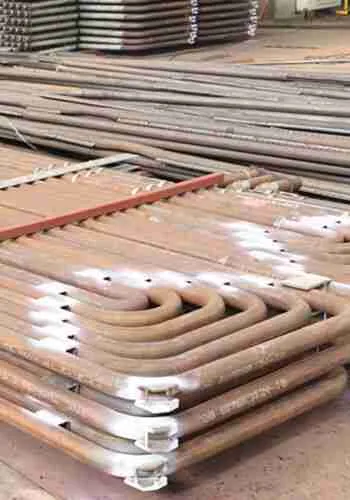
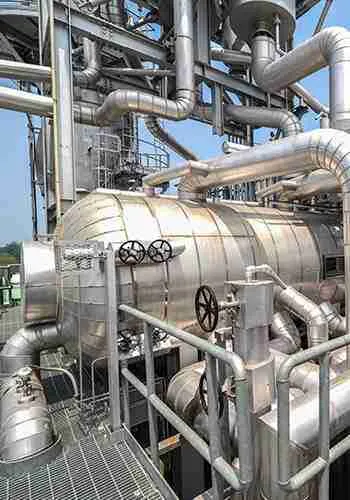
In the steam-water systems of power station and industrial boilers, Water Walls and economizers are the two core heating surface components. They complement each other’s functions, connect sequentially, and are deeply coupled. By absorbing flue gas heat in stages to complete the steam-water conversion, they ensure the safe and highly efficient operation of the boiler. The water-cooled wall handles high-temperature radiant heat transfer in the furnace, while the economizer recovers low-temperature waste heat at the tail. Their collaborative synergy is the key to stable steam generation, energy saving, and consumption reduction in boilers.
I. Positional Differentiation: Complementary Division in High and Low-Temperature Zones
The two components differ significantly in layout, heat transfer mode, and function, forming a stratified heat utilization system that serves as the foundation for their collaborative operation.
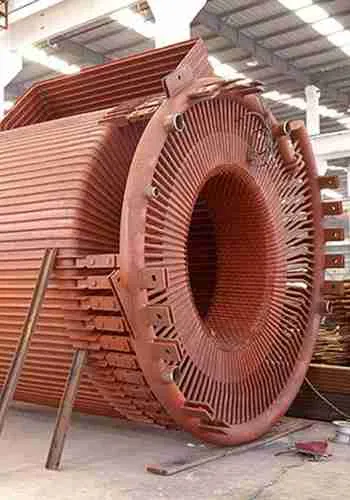
Water Walls: Arranged around the boiler furnace, these serve as the core radiant heating surface. They rely on radiant heat transfer to absorb heat from the flue gas, which has high temperatures oin the furnace. This heat vaporizes the water inside the tubes into saturated steam, fulfilling the boiler’s core steam generation task while isolating the high-temperature flames to protect the furnace wall structure.
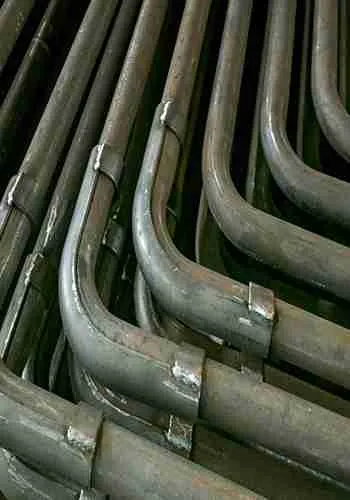
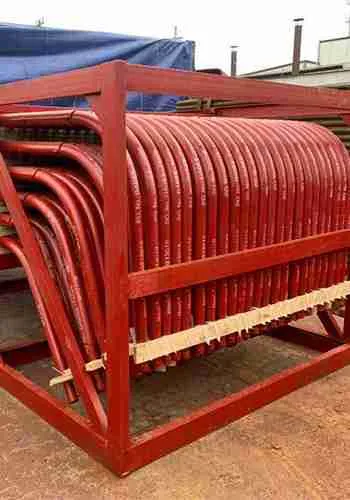
Economizers: Arranged in the low-temperature flue gas pass at the tail of the boiler (located after the Water Walls), they recover residual low-temperature waste heat via convective heat transfer. By preheating the low-temperature feed water and raising its inlet temperature, they effectively reduce fuel consumption and improve energy efficiency.
Together, they create a stratified layout characterized by “core high-temperature heat transfer in the furnace and low-temperature waste heat recovery at the tail,” maximizing the utilization of flue gas thermal energy.
II. Process Linkage: Closed-Loop Connection of the Steam-Water Cycle
Connected in series, the two form the complete link for boiler steam-water conversion. They are indispensable sequential stages in the steam-water cycle, and their operating conditions mutually constrain one another.
The low-temperature boiler feed water does not enter the Water Walls directly. Instead, it first flows into the economizer to be preheated through counter-current convective heat transfer.
The preheated feed water is then routed through the steam drum and downcomers into the furnace Water Walls.
Here, it absorbs high-temperature radiant heat, rapidly boils, and vaporizes into a steam-water mixture. After steam-water separation, qualified saturated steam is produced.
Key Synergy: The economizer acts as the front-end preheating device for the Water Walls, reducing their heat transfer load and shortening the water vaporization cycle. Conversely, the water-cooled wall is the final work-bearing vehicle for the preheated feed water; without its vaporization effect, the preheating function of the economizer would hold no practical value. The two operate in a closed loop—neither can be dispensed with.
III. Condition Complementarity: Collaborative Guarantees for Safety and Efficiency
The operating conditions of both components adapt to and empower one another, jointly ensuring stable boiler operation while reducing energy consumption and equipment wear.
On one hand, the economizer significantly raises the feed water temperature, narrowing the temperature difference between the feed water, the Water Walls, and the steam drum. This effectively mitigates thermal shock and thermal stress, preventing tube wall fatigue, cracking, and deformation, thereby extending the lifespan of the Water Walls and improving operational safety.
On the other hand, the heat transfer condition of the Water Walls directly determines the operational state of the economizer. When the Water Walls transfer heat efficiently and absorb sufficient heat, the flue gas exit temperature remains controllable, providing a stable waste heat recovery condition for the economizer. If the Water Walls suffer from slagging, ash accumulation, or deteriorated heat transfer, the flue gas temperature will rise abnormally. This exacerbates wear and corrosion in the economizer, increasing the risk of equipment failure and exhaust heat loss.
Through this staged utilization of high and low-temperature heat, the two components minimize waste heat loss and significantly boost the boiler’s overall thermal efficiency.
IV. Maintenance Symbiosis: Fault Linkage and Collaborative Inspection
Water Walls and economizers share a symbiotic relationship in their operating conditions and fault linkages. Their maintenance standards are highly unified, requiring synchronized management and preservation.
Fault Propagation: Failures in the Water Walls—such as slagging, wear, or tube bursts—cause abnormal flue gas temperatures, which can induce secondary problems like over-temperature, ash fouling, and low-temperature corrosion in the economizer. Conversely, if the economizer fails to transfer heat properly and under-preheats the feed water, it increases the thermal load on the Water Walls, potentially triggering localized overheating and poor water circulation.
Water Quality Impacts: Scaling caused by substandard water quality simultaneously degrades the heat transfer efficiency of both components, creating a vicious operational cycle.
Consequently, daily operations require the simultaneous monitoring of core parameters such as furnace temperature, wall temperature, water temperature, and exhaust gas temperature. Regular maintenance tasks—including ash blowing, descaling, leak detection, and anti-corrosion treatments—must be performed on both devices in tandem. Neglecting the maintenance of either component will disrupt the boiler’s thermal balance, compromising both safety and efficiency.
V. Conclusion
In summary, the water-cooled wall and the economizer are core partners in the boiler steam-water system, featuring complementary functions, sequential processes, coupled operating conditions, and symbiotic maintenance. The economizer provides front-end preheating, reducing thermal load and protecting equipment, while the water-cooled wall handles core heat transfer and stabilizes overall operating conditions.
By relying on a collaborative model of “front-and-back, radiation-and-convection, high-and-low,” they construct a comprehensive framework for staged flue gas thermal energy utilization and steam-water conversion. They stand as the core pillars supporting the safe, stable, and economic operation of modern boilers.