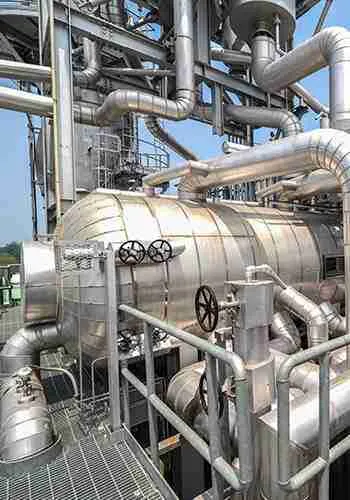
In the global pursuit of sustainable energy and reduced carbon footprints, the choice of industrial and commercial boilers has become increasingly significant. Two predominant types—biomass boilers and coal boilers—offer distinct advantages and challenges. This in-depth analysis explores the key differences between these systems, focusing on energy sources, environmental impact, operational principles, costs, emissions, and ideal applications, with a particular emphasis on the growing importance of biomass boiler technology.
Introduction: The Energy Transition and Boiler Technology
The world is undergoing a critical energy transition. With increasing pressure to mitigate climate change and reduce reliance on finite fossil fuels, industries are actively seeking cleaner, more sustainable alternatives for their thermal energy needs. This shift has brought the biomass boiler into the spotlight, positioning it as a powerful contender against the traditional, yet increasingly scrutinized, coal boiler. Understanding the fundamental differences between these systems is essential for any business or organization making strategic decisions about its energy infrastructure.
1. Energy Source: Renewable Organic Matter vs. Fossilized Carbon
The most fundamental difference lies in their fuel.
- Biomass Boiler: A biomass boiler utilizes organic, renewable materials known as biomass. This feedstock is incredibly diverse and can include:
- Wood chips and sawdust from forestry operations
- Wood pellets (a standardized, processed form)
- Agricultural residues (e.g., straw, husks, nutshells, bagasse from sugarcane)
- Dedicated energy crops (e.g., fast-growing willow or miscanthus)
- Certain types of organic waste
- Coal Boiler: In contrast, a coal boiler relies on coal, a fossil fuel formed from ancient plant matter over millions of years. It is a finite resource extracted through mining. Types include anthracite, bituminous, and lignite, each with varying energy content and pollution profiles.
Key Takeaway: A biomass boiler runs on a renewable, sustainably sourced cycle, while a coal boiler consumes a finite, mined resource.
2. Environmental Impact: Carbon Neutrality vs. High Emissions
This is arguably the most significant differentiator and the primary driver behind the adoption of biomass boiler technology.
- Biomass Boiler: The combustion of biomass is widely considered to be carbon-neutral over a relatively short time cycle. The carbon dioxide (CO₂) released during burning is approximately equal to the CO₂ absorbed by the plants during their growth. This creates a closed carbon cycle, meaning it does not contribute to a net increase in atmospheric CO₂, assuming sustainable harvesting and replanting practices. Furthermore, modern biomass boiler systems are equipped with advanced emission control technologies that minimize the release of other pollutants.
- Coal Boiler: Coal combustion is a major contributor to global greenhouse gas emissions. It releases carbon that has been sequestered underground for millennia, resulting in a net addition of CO₂ to the atmosphere. It is also a primary source of sulfur dioxide (SO₂), which causes acid rain, and mercury, a potent neurotoxin. Even with modern scrubbers and filters, the environmental footprint of a coal boiler remains substantially higher than that of a biomass boiler.
Key Takeaway: A biomass boiler offers a path to decarbonization and significantly improved environmental performance compared to a coal boiler.
3. Operational Principles and Technology
While both types generate heat through combustion, their design and handling differ.
- Biomass Boiler: Technology can vary. Some systems involve direct combustion of fuel in a chamber to heat water. More advanced systems may use a gasification process, where the biomass is converted into a synthetic gas (syngas) before combustion. This is often more efficient and cleaner. Fuel handling is crucial; automated feed systems (e.g., augers, hoppers) are common for pellets and chips to ensure consistent and efficient burning. The ash produced is typically richer in minerals and can often be recycled as fertilizer.
- Coal Boiler: These systems are designed for direct combustion. Pulverized coal is often blown into the combustion chamber where it burns at very high temperatures. The systems are engineered to handle the specific properties of coal, including its high ash content and slagging potential. Coal handling involves extensive infrastructure for storage, crushing, and feeding. The resulting coal ash is a significant waste product that often contains heavy metals and requires careful disposal in landfills.
Key Takeaway: Both technologies are mature, but a modern biomass boiler often incorporates advanced gasification and automated feeding to handle diverse organic fuels efficiently.
4. Fuel Cost and Supply Stability
The economic calculation is complex and highly region-dependent.
- Biomass Boiler: The cost of biomass fuel can be volatile and is influenced by factors like:
- Seasonality: Availability of agricultural residues can be seasonal.
- Local Supply Chain: Proximity to forests or farms drastically reduces transportation costs. A stable local supply is critical for economic viability.
- Competition: Demand from other sectors (e.g., animal bedding, panel board industry) can affect price.
While the fuel itself can sometimes be cheaper, the operational costs of a biomass boiler might involve more manual handling and maintenance. However, it protects the user from the volatility of international fossil fuel markets.
- Coal Boiler: Coal has historically been a cheap and energy-dense fuel. However, its price is subject to global market fluctuations, geopolitical instability, and increasing carbon taxes or emissions penalties. The long-term cost trajectory is upward due to environmental regulations. While the supply is generally stable, it is subject to the dynamics of the mining and transportation industries.
Key Takeaway: A biomass boiler offers insulation from fossil fuel price shocks but requires a secure, local biomass supply chain to be cost-effective.
5. Emissions Profile: Beyond CO2
A detailed look at what comes out of the stack.
- Biomass Boiler:
- CO2: Considered biogenic (carbon-neutral).
- NOx (Nitrogen Oxides): Emissions are generally lower than coal but still require management through controlled combustion and potentially Selective Non-Catalytic Reduction (SNCR) systems.
- SO2 (Sulfur Dioxide): Virtually zero, as biomass contains very little sulfur.
- Particulate Matter (PM): Can be a challenge, especially with inconsistent fuel quality. However, advanced cyclones, baghouse filters, and electrostatic precipitators on a biomass boiler can capture over 99% of particulates.
- Coal Boiler:
- CO2: High levels of fossil carbon emissions.
- NOx: Significant emissions, requiring sophisticated control systems.
- SO2: High emissions, necessitating flue gas desulfurization (scrubbers).
- PM: High levels, controlled with extensive filtration.
- Heavy Metals: Emits mercury, arsenic, and other toxic metals.
- Coal Ash: Produces large amounts of solid waste.
Key Takeaway: A well-operated and well-maintained biomass boiler with proper emission controls produces a dramatically cleaner flue gas than a coal boiler, with minimal SO2 and no mercury emissions.
6. Ideal Application Scenarios
Choosing the right boiler depends on the context.
- Biomass Boiler is Ideal For:
- Facilities with easy access to low-cost biomass (e.g., sawmills, furniture manufacturers, agricultural processors, districts with forestry resources).
- Projects with sustainability mandates or goals (e.g., green certification, corporate social responsibility targets).
- Combined Heat and Power (CHP) plants aiming for high efficiency and renewable energy generation.
- Regions offering government incentives, grants, or carbon credits for renewable energy use.
- Coal Boiler is Still Found In:
- Large-scale, legacy power generation plants, especially in regions with domestic coal reserves and less stringent environmental regulations.
- Certain heavy industries where coal has been the traditional fuel and switching costs are high.
- Applications where the high energy density of coal is a critical factor, and alternative infrastructure is not yet available.
Conclusion: The Future is Renewable
The comparison reveals a clear trajectory. While coal boilers have been the workhorses of industry for over a century, their environmental drawbacks are now paramount. The future of thermal energy is shifting decisively towards renewable and low-carbon solutions.
The biomass boiler stands out as a mature, robust, and immediately available technology to facilitate this transition. It represents a strategic investment that reduces carbon footprint, enhances energy security through local sourcing, and future-proofs operations against rising carbon taxes and fossil fuel volatility.
For any organization committed to operational efficiency, environmental stewardship, and long-term cost management, transitioning from a coal boiler to a high-efficiency biomass boiler is not just an alternative—it is a forward-thinking step into a sustainable energy future. The initial investment is balanced by the long-term benefits of lower emissions, stable fuel costs, and a positive environmental legacy.