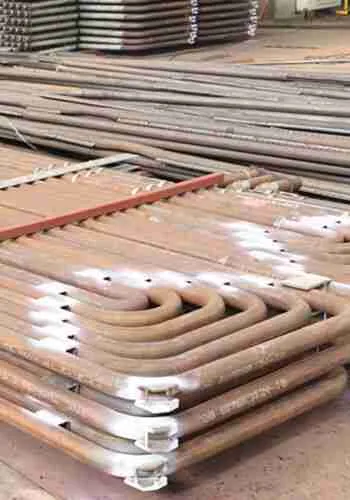
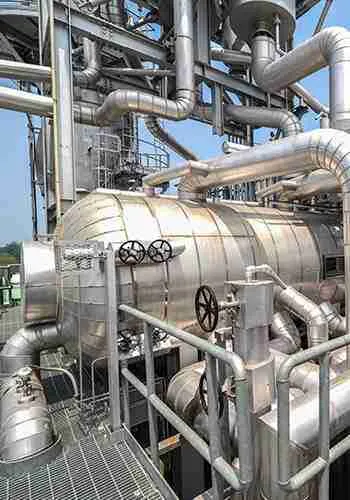
The economiser, as a critical component of the boiler system, plays a central role in recovering waste heat from flue gases, improving overall thermal efficiency, and significantly reducing fuel consumption. Its application not only relates to economic benefits for enterprises but is also an essential measure for achieving the “dual carbon” goals. This article explains the importance of the economiser in boiler from four dimensions: working principle, energy-saving mechanism, practical benefits, and future development.
I. Thermodynamic Principle: A Model of Cascaded Energy Utilization
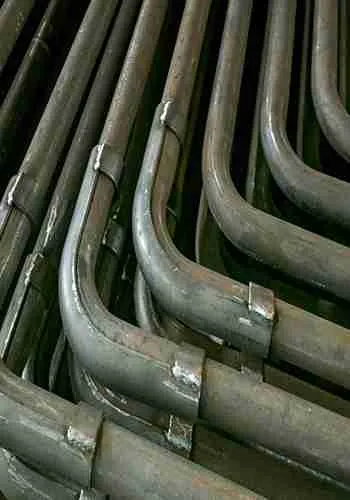
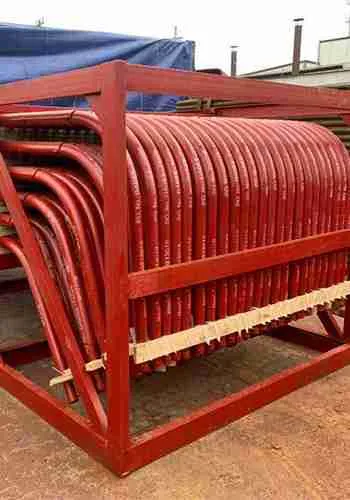
The economiser, arranged in the rear flue of the boiler, uses serpentine tube bundles to preheat feedwater with 200–400°C exhaust gas. Its working principle aligns with the second law of thermodynamics, utilizing energy in a cascaded manner: transforming the high-temperature waste heat carried by flue gas into sensible heat of feedwater, raising its temperature from ambient to near-saturation (typically above 150°C). This process generates multiple benefits:
- For every 10°C increase in feedwater temperature, boiler efficiency rises by about 0.5%.
- Preheated feedwater reduces thermal shock when entering the drum, extending equipment life.
- For every 15–20°C reduction in flue gas temperature, boiler efficiency increases by about 1%.
This is the fundamental principle behind the economiser in boiler.
II. Energy-Saving Mechanism: From Heat Recovery to System Optimization
- Deep Waste Heat Recovery – According to China’s 2022 Industrial Energy Efficiency Improvement Action Plan, installing a high-efficiency economiser can reduce flue gas temperature from 160°C to below 110°C, recovering 15–20% of waste heat. In one power plant case, adding an H-fin tube economiser in boiler saved 12,000 tons of standard coal per year and cut CO₂ emissions by 31,000 tons.
- Dynamic Fuel Consumption Adjustment – When feedwater is preheated from 100°C to 180°C, fuel needed to generate the same amount of steam decreases by 8–12%. This “waste-for-fresh” approach increases boiler efficiency from 88% (traditional design) to over 93%. In CHP projects, the economiser in boiler, combined with an air preheater, can raise overall system efficiency beyond 95%.
- Three Layers of Heat Loss Reduction
- Physical barrier: extended heating surfaces such as spiral finned tubes increase heat exchange area 3–5 times.
- Chemical barrier: corrosion-resistant materials (e.g., ND steel) mitigate risks of low-temperature corrosion and leakage.
- System barrier: bypass valve control enables optimization under variable operating conditions.
III. Dual Benefits: Economic and Environmental
In a paper mill case, after installing a composite phase-change economiser in a 35 t/h chain grate boiler:
- Annual operating costs dropped by about USD 300,000 (USD 265,000 fuel savings + USD 35,000 maintenance savings).
- Payback period was only 11 months.
- Dust concentration in exhaust decreased from 80 mg/m³ to 35 mg/m³.
When coal prices rise, the economic benefit of an economiser in boiler becomes even more significant. For example, at RMB 900/ton coal price, energy-saving returns increase by 1.8 times. From an environmental perspective, if all coal-fired power plants in China improved economiser efficiency by 5 percentage points, the annual CO₂ reduction would equal the output of 1.5 Three Gorges hydropower stations.
IV. Technological Evolution and Innovation Trends
Modern economiser in boiler technology is developing in three directions:
- Material Innovation – corrosion-resistant materials such as ND steel and ceramic composites expand the lower temperature limit below the acid dew point (down to 85°C), enabling more thorough heat recovery.
- Structural Innovation – new designs such as spiral finned tubes and heat pipe economisers increase heat transfer coefficients by 40% while solving ash deposition issues. For example, a 660 MW supercritical unit using longitudinal vortex generators reduced economiser resistance by 30%.
- Smart Control – digital-twin-based systems dynamically adjust water flow based on real-time flue gas composition and flow data, ensuring the economiser in boiler always operates at peak efficiency.
V. Expanded Applications and Challenges
Beyond the power industry, the economiser in boiler shows new value in multiple sectors:
- Steel industry: recovering sensible heat from 1450°C coke oven gas for power generation.
- Waste incineration: special coating economisers withstand high-chlorine corrosion, enabling steam parameters to rise from 4 MPa to 6 MPa.
- Marine propulsion: compact micro-channel economisers help LNG-powered ships maximize fuel utilization.
Challenges remain, including acid dew point corrosion during low-load operation and high-alkali corrosion from biomass fuels. Future innovations such as nano-coatings and phase-change heat storage could further boost the energy-saving potential of the economiser in boiler by 15–20%.
Conclusion
In essence, the economiser in boiler not only saves fuel directly but also improves the entire thermodynamic cycle through system coupling effects. This century-old technology is being revitalized under the global “dual carbon” strategy, becoming an indispensable “guardian of thermal energy” for industrial energy conservation. Its value has shifted from a single energy-saving device to a full life-cycle energy efficiency management system covering design, operation, and maintenance—setting a benchmark for the green transformation of high-energy industries.