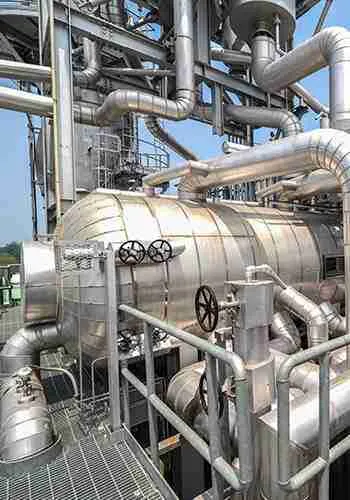
Boilers are critical energy conversion equipment among the three major components of a power plant. They transform the chemical energy of fuel into thermal energy, which is used to heat water and produce superheated steam with sufficient volume and specific parameters (temperature and pressure). This steam is then supplied to steam turbines for power generation. Modern thermal power plant boilers are characterized by large capacity, high parameters, technical complexity, and a high degree of mechanization and automation. Coal is the primary fuel used, and it is pulverized into fine powder before being fed into the boiler for combustion. In summary, the main processes in a boiler include fuel combustion, heat transfer, water heating, evaporation, and steam superheating.
A boiler system consists of two major parts: boiler proper and auxiliary equipment.
I. Boiler Proper
The boiler proper is the core component of the boiler system and is divided into the “steam-water system” and the “combustion system” .
1. Steam-Water System
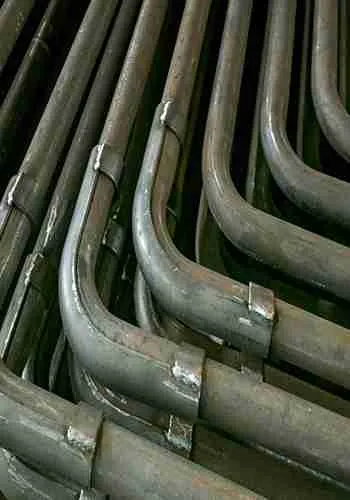
The steam-water system is responsible for absorbing heat released by fuel combustion to heat water, evaporate it, and ultimately convert it into superheated steam with specific parameters. It includes the following components and their connecting pipes and valves:
(1) Economiser
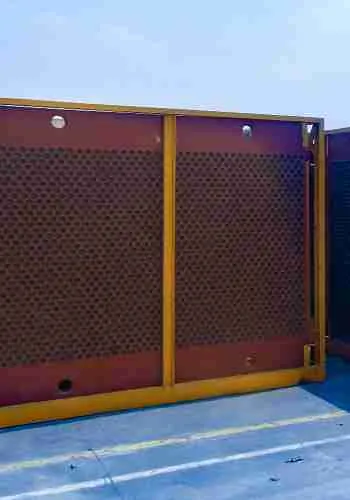
Located in the vertical flue gas duct at the boiler tail, the economiser utilizes waste heat from flue gases to preheat the boiler feedwater. This process reduces exhaust gas temperature, improves boiler efficiency, and saves fuel.
(2) Steam Drum
The steam drum is a cylindrical pressure vessel positioned at the top of the boiler. It stores water at the bottom and steam at the top. It receives preheated water from the economiser and, together with downcomers, headers, and water walls, forms a water circulation loop. The steam-water mixture generated in the water walls is collected in the steam drum, where steam is separated from water. The saturated steam is then supplied to the superheater.
(3) Downcomers
Downcomers are water supply pipes for the water walls. They deliver water from the steam drum to the lower headers, which distribute it to the water wall tubes. There are two types: small-diameter distributed downcomers and large-diameter concentrated downcomers. Small-diameter downcomers are less favorable for water circulation.
(4) Lower Headers of Water Walls
Headers are used to collect or redistribute working fluid. The lower header of the water walls is a thick, sealed pipe that connects the downcomers to the water walls, facilitating the collection, mixing, and redistribution of the working fluid.
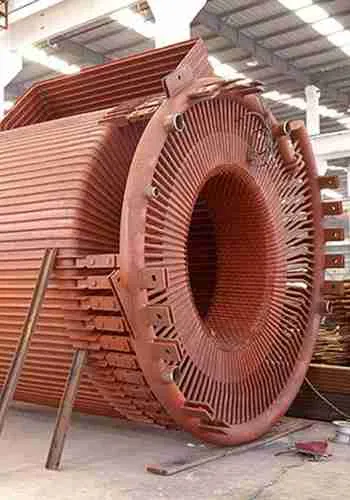
(5) Water Walls
Water walls are arranged around the furnace chamber and absorb radiant heat from the furnace to facilitate water evaporation. They are the primary heating surfaces in modern boilers and also protect the furnace walls from excessive heat.
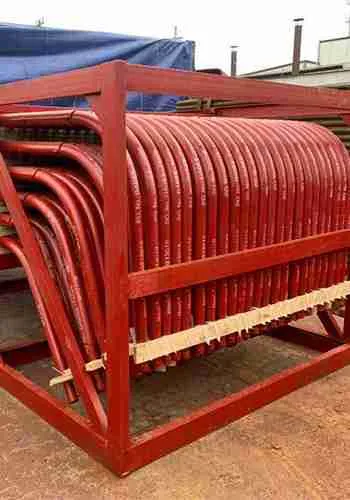
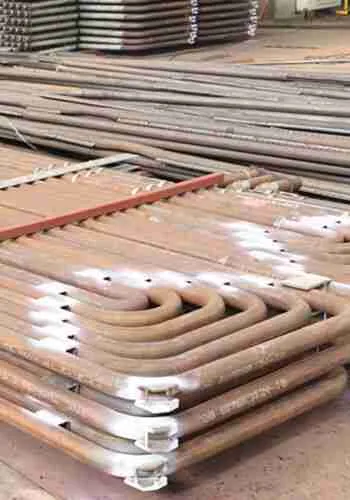
(6) Superheater
The superheater heats saturated steam from the steam drum to produce superheated steam with specific temperature requirements.
(7) Reheater
The reheater heats steam that has partially expanded in the steam turbine, increasing its temperature before redirecting it back to the turbine for further work.
2. Combustion System
The combustion system ensures efficient fuel combustion within the furnace to release heat. It consists of the following components:
(1) Furnace
The furnace is an enclosed space formed by furnace walls and water walls, where fuel is combusted in a suspended state, releasing significant amounts of heat.
(2) Burners
Burners are located at the corners or walls of the furnace. They inject fuel and air into the furnace at specific velocities to ensure proper mixing, timely ignition, and complete combustion. The two main types are direct-flow burners and swirl burners.
(3) Air Preheater
Situated in the boiler’s tail flue, the air preheater uses residual heat from flue gases to preheat the air required for combustion. This further reduces exhaust gas temperature, enhances combustion efficiency, improves economic performance, and aids in drying and transporting pulverized coal. It can increase boiler efficiency by approximately 2%. The two common types are tubular and regenerative air preheaters.
(4) Flue Gas and Air Ducts
These ducts, formed by furnace walls, heating surfaces, and wall tubes, guide the flow of flue gases through various heat exchange surfaces. They are divided into horizontal ducts and tail ducts.
II. Auxiliary Equipment
Auxiliary equipment includes:
- Ventilation equipment (forced-draft and induced-draft fans)
- Fuel transportation systems
- Pulverized coal preparation systems
- Ash and slag removal systems
- Dust removal equipment
- Desulfurization systems
III. Working Process of a Power Plant Boiler
Raw coal from the coal bunker is fed into a pulverizer via a coal feeder to be ground into fine powder. During this process, hot air is used to dry and heat the coal. Cold air from the environment is drawn by forced-draft fans into the air preheater, where it is heated by flue gases. Part of this hot air is directed into the pulverizer to dry and transport the pulverized coal, while the rest is supplied directly to the burners to support combustion.
The mixture of pulverized coal and air is injected into the furnace through burners, where it ignites and burns rapidly, releasing intense heat and raising the temperature at the furnace core to 1500°C or higher. The water walls surrounding the furnace and the superheaters located at the top absorb radiant heat, cooling the furnace and protecting the walls from damage.
To prevent molten ash from adhering to the heating surfaces, the flue gas temperature at the furnace outlet is maintained below the ash melting point. The high-temperature flue gas passes through the superheater in the horizontal duct and then enters the tail duct, where it exchanges heat with the reheater, economiser, and air preheater. Gradually cooled, the flue gas exits the air preheater at temperatures between 110°C and 160°C. It then passes through a dust collector to remove fly ash before being discharged into the atmosphere via the chimney.
Larger ash particles settle at the bottom of the furnace (hopper), cool, and are removed as solid slag. Feedwater, pressurized by feed pumps, is preheated in high-pressure heaters before entering the economiser. There, it absorbs residual heat from the flue gases and proceeds to the steam drum. The water then circulates through the downcomers, lower headers, and water walls, where it absorbs heat and partially evaporates into a steam-water mixture. This mixture returns to the steam drum for separation. The separated water continues to circulate, while the saturated steam is directed to the superheater for further heating. The final superheated steam is supplied to the steam turbine to generate power.
In high-parameter, large-capacity units, intermediate reheat cycles are adopted to improve thermal efficiency and turbine performance. Steam partially expanded in the high-pressure turbine is returned to the reheater for additional heating before being redirected to the intermediate and low-pressure turbines.
About DHB Boiler
DHB Boiler is an ASME “S” and “U” Stamp authorized manufacturer and an A-grade boiler and pressure vessel producer. The company offers comprehensive services, including boiler design, manufacturing, installation, maintenance, and repair. With a commitment to quality and innovation, DHB Boiler provides reliable and efficient solutions for thermal power plants and industrial applications worldwide.