Amidst the tide of transformation and upgrading in China’s manufacturing sector, a modern factory is elevating traditional industrial manufacturing to unprecedented heights. This is not a story about price wars, but a profound narrative about technology, standards, and the global restructuring of value.
I. A New Definition of “Made in China” in the Global Energy Transition
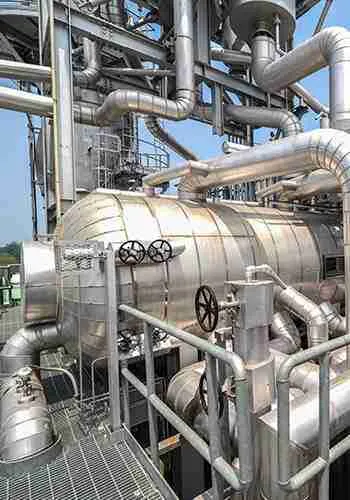
Zhangjiagang DHB Boiler Co., Ltd. may appear to be a traditional heavy industrial manufacturer, yet its development path precisely mirrors the changing role of Chinese manufacturing within the global industrial chain. As the global energy landscape shifts towards low-carbon, high-efficiency, and diversification—with biomass power generation, waste-to-energy , and heat recovery steam generators emerging as new frontiers—the conventional boiler is no longer a simple steel vessel. It has become a core hub for energy conversion, efficiency enhancement, and enabling a circular economy.
DHB Boiler possesses two critical “passports”: the ASME “S” (Power Boiler) and “U” (Pressure Vessel) stamps, representing the highest international standards for safety and quality, and China’s highest-level Class A Boiler Manufacturing License. This dual accreditation signifies not only its capability to manufacture products according to the world’s most stringent regulations but also that its manufacturing systems, quality control, and culture are fully aligned with top global standards. For global procurement managers, this directly eliminates potential concerns about standards associated with “Made in China,” shifting the competition squarely to the arenas of performance, efficiency, and total lifecycle cost.
Its client roster—including global giants in energy and environmental sectors such as Alstom, Babcock & Wilcox , and Covanta Energy—speaks volumes. Becoming a qualified supplier for these companies cannot be achieved through low prices alone. It requires successfully navigating their near-exacting supplier audit systems, demonstrating impeccable performance in technical consistency, production stability, and quality traceability. Supporting this is the seamless operation of seven integrated management systems, including ISO 9001:2015 Quality Management and ISO 3834-2 Welding Quality systems, covering everything from design and procurement to production and inspection. Every weld point, every process step, is placed under the microscope of international standards.
II. Microscopic Welding: Viewing “Craftsmanship Spirit” and Industrial Science in Manufacturing
If accreditations are the entry ticket, then the relentless pursuit of core process perfection is the foundation for earning enduring trust. Boilers, especially those used in high-efficiency power plants and for supercritical parameters, operate for extended periods under extreme conditions exceeding 600°C and pressures of tens of megapascals. Critical components like superheaters and reheaters extensively employ high-alloy heat-resistant steels such as T91/P91. This material acts like the “muscle” of a boiler, offering exceptional strength, yet its welding poses a global technical challenge.
DHB Boiler’s technical publications avoid hollow)marketing rhetoric, instead delving deeply into hardcore topics like “How to Perfectly Weld T91 Steel.” This unintentionally reveals an intrinsic shift within China’s high-end manufacturing: from imitation to comprehension, from making to creating.
Welding T91 steel is far from mere “metal stitching.” It is a feat of precise control overmaterials metallurgy:
- Precise Preheating: The material must be accurately preheated to 200-250°C before welding to prevent cold cracking.
- Strict Interpass Temperature Control: Throughout the welding process, temperature must be continuously monitored to ensure it remains within a narrow “safe window.”
- Mandatory Post-Weld Heat Treatment : After welding is complete, heat treatment following a specific temperature profile is obligatory. This relieves residual stress and transforms the weld microstructure from brittle martensite to tough tempered martensite, thereby achieving long-term high-temperature performance that matches the base metal.
Even a minor deviation can lead to fatal “Type IV Cracking” in the heat-affected zone after years of operation, potentially causing disastrous failure. What DHB showcases is the elevation of welding from a “craft” to a quantifiable, controllable, and traceable “industrial science.” They utilize senior welders holding ASME certifications and rigorously enforce Welding Procedure Qualifications , ensuring every critical weld follows a validated “prescription.” Post-manufacturing, they employ multiple Nondestructive Testing techniques such as Radiographic Testing , Ultrasonic Testing , and Penetrant Testing —akin to conducting precise “CT scans”—to guarantee internal integrity is flawless.
This obsession with microscopic quality constructs the most robust macro-level trust. When a customer purchases a boiler, they are essentially buying a promise of safety, stability, and continuous power generation for the next twenty to thirty years. Through its processes, DHB materializes this intangible promise into every inch of its welds.
III. “Turnkey” Projects: From Product Export to Value and Knowledge Export
Another major strategic expansion for DHB lies in its upgraded positioning—it doesn’t merely sell boilers; it provides comprehensive “turnkey” solutions.
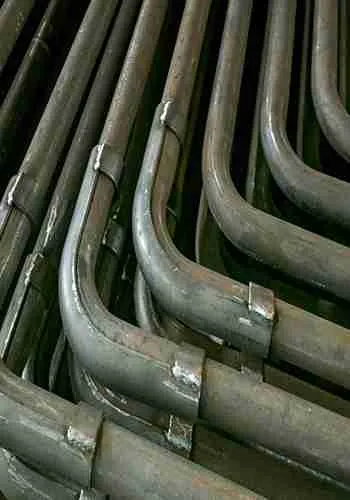
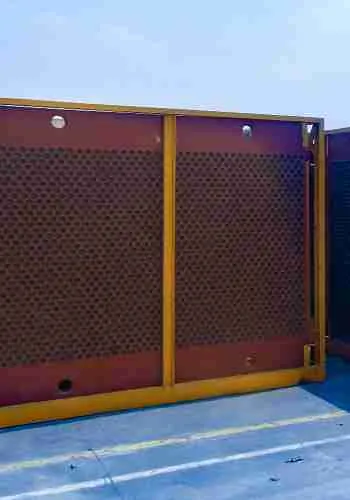
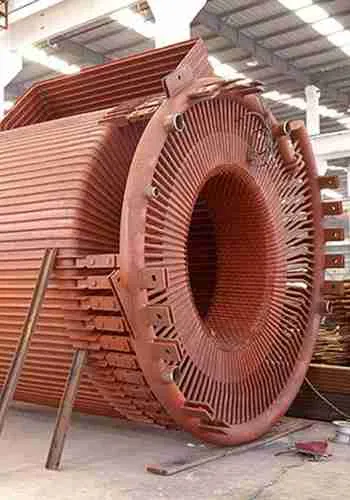
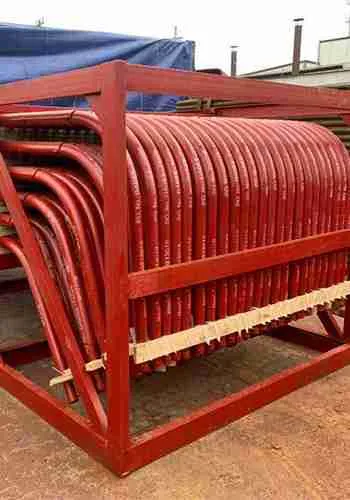
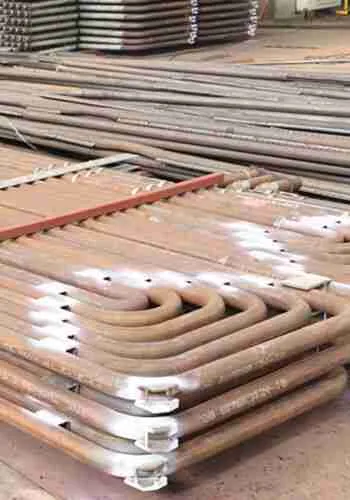
This means DHB can assume end-to-end responsibility: from initial project feasibility analysis and design modeling, to the manufacturing and supply of the core boiler and all auxiliary equipment (including water walls, superheaters, economizers, cyclone separators, air preheaters, and even thousands of components like tube clamps and welding studs), and further to on-site installation guidance, commissioning, and lifelong maintenance support. This model significantly reduces management complexity and technical risk for project owners, particularly those in developing countries along the “Belt and Road” initiative.
It transforms itself from an equipment manufacturer into the client’s “Energy Solutions Partner” and “Local Capacity Builder.” While delivering physical boilers, it simultaneously exports a proven knowledge system for power plant construction and operation. This extension of value enriches the connotation of “Made in China” from hardware products to a “soft power” package encompassing design, engineering management, and services.
Its modern factory spanning over 80,000 square meters and its global footprint covering 36 countries and regions serve as potent evidence of its capabilities. From Asian rainforests to Middle Eastern deserts, from power plants in the Americas to industrial parks in Africa, DHB’s boilers are efficiently and cleanly converting various fuels—be it coal, biomass, waste, or industrial waste heat—into electricity and power. This aligns perfectly with the core themes of global sustainable development: enhancing energy efficiency and fostering a circular economy.
IV. Conclusion: Repositioning Within the Coordinates of Trust
The story of DHB Boiler is a representative case study of the transformation and upgrading within China’s high-end equipment manufacturing sector. It clearly indicates that in the global industrial goods market, the core coordinates of competition have shifted.
The vertical axis is “Technical Depth“: The degree of mastery over materials science, core processes (like welding), system integration, and intelligent control determines the performance ceiling and long-term reliability of products. This requires sustained R&D investment and technological accumulation over decades; it cannot be achieved overnight.
The horizontal axis is “Standard Altitude“: Proactively embracing, internalizing, and even surpassing the highest international industry standards (like ASME) serves as the entry ticket for participating in mainstream market competition and earning the trust of high-end clients. This represents a commitment to self-innovation and a globally responsible attitude.
When a Chinese manufacturing enterprise can firmly establish a high position on both these axes, price ceases to be its primary, or even a key, competitive dimension. What it offers is long-term value founded upon deep technical trust—lower failure rates, higher availability, longer service life, and superior total lifecycle cost.
DHB Boiler represents precisely this type of Chinese manufacturer: they diligently cultivate deeply their field, building the “Craftsmanship Spirit” upon a foundation of systematic industrial science; they are no longer content with being merely the “hands and feet” of the global factory but aspire to become the indispensable “brain” and “backbone” within the global energy transition. On the global industrial value chain, they are steadily advancing from followers to parallel runners, and in certain niche segments, even becoming definers. This, perhaps, is the most profound value redefinition of “Made in China” in the new era.