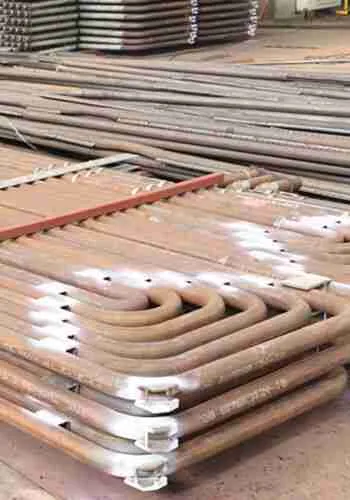
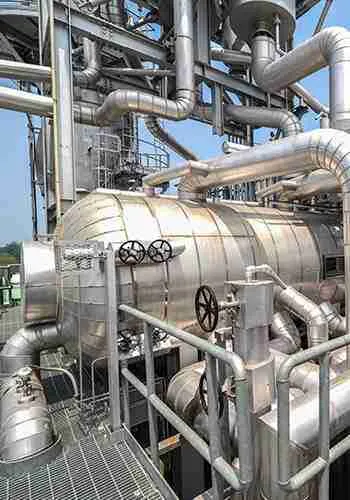
In furnaces of thermal power plants, industrial boilers, and other large thermal devices, flames can reach temperatures of thousands of degrees Celsius—easily scorching metals and damaging the furnace structure. The key that enables boilers to operate stably under such extreme heat is the water wall: a “close-fitting guardian” lining the inside of the furnace. This seemingly simple tubular structure is both a core hub for heat conversion and a sturdy shield for the furnace, embodying deep engineering wisdom.
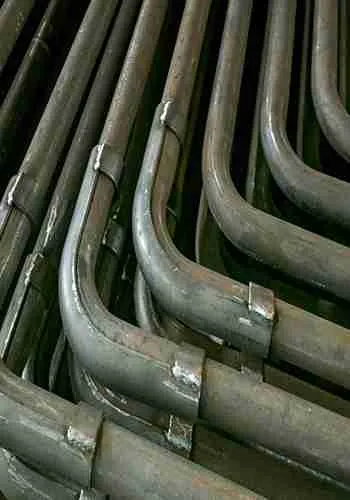
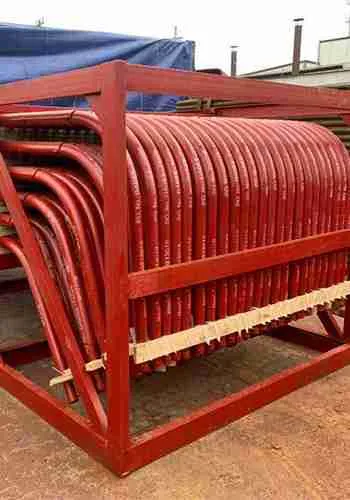
A water wall is an evaporative heating surface made of several rows of seamless steel tubes connected in parallel, usually arranged vertically or at specific angles around the furnace chamber; in some large boilers, partition-type water walls are also installed in the furnace center. Its operating principle is clever: water or a water-steam mixture flows inside the tubes while the outside is directly exposed to flames and high-temperature flue gas. The high thermal radiation is transmitted through the tube walls to the fluid inside, causing the water to evaporate into steam; the heat absorption also lowers the temperature of the furnace walls, achieving both “energy conversion” and “cooling protection.”
Interestingly, the original intent of the water wall was not to maximize heat absorption but simply to cool the furnace and protect it from high-temperature attack. Later, it was discovered that water walls are highly effective heat ex-changers, capable of absorbing 40%–50% or more of the boiler’s heat. Over time they replaced drum-type surfaces as the primary evaporative heating area and became an indispensable component of modern water-tube boilers.
The core missions of the water wall
As the dual-purpose component responsible for “core heat absorption and safety protection,” the water wall’s roles span several dimensions, each directly affecting operational efficiency and safety.
The primary task is efficient heat absorption and steam production. Furnace radiation is intense, and by providing a large area exposed to the flame, the water wall quickly transfers radiation heat to the flowing water, which evaporates into saturated steam for power generation or industrial use. Because radiation is the dominant mechanism, its heat transfer efficiency far exceeds convective heat transfer and is critical for energy conversion in boilers.
Second, it protects the furnace walls and extends service life. Without a water wall, intense flame would rapidly age, crack, or even collapse the furnace walls. The water wall significantly reduces inner wall temperatures, allowing for thinner furnace walls and lighter overall equipment, while suppressing slag buildup and high-temperature corrosion—stabilizing the structure and markedly prolonging service life.
Additionally, the water wall optimizes furnace conditions. Membrane water walls in particular greatly improve furnace air tightness and reduce air leakage and flue gas heat loss; they also inhibit clinker formation, creating favorable conditions for complete fuel combustion—achieving both energy saving and safety.
Main types and characteristics of water walls
Depending on structural form and arrangement, water walls are mainly categorized into four types, each tailored to different boiler parameters and working conditions.
Plain-tube (smooth-tube) water wall: simple and reliable
This is the most basic type, composed of rows of ordinary seamless tubes. It is simple, inexpensive to manufacture, and widely used in small-to-medium boilers. The packing tightness is measured by the ratio of tube spacing to tube outer diameter (s/d): small boilers use larger s/d (1.5–2), which has high metal utilization but weaker furnace protection and requires heavy refractory brick walls; large boilers reduce s/d to about 1.1–1.2, offering better protection and enabling lighter furnace walls. Its drawbacks include poorer furnace sealing and relatively complex furnace-wall structures; thermal expansion must be carefully managed during installation.
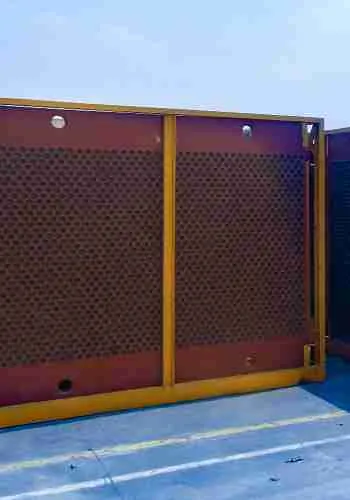
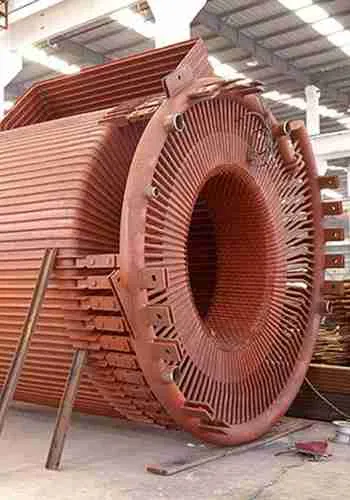
Membrane water walls are the preferred choice for medium-to-large, high-temperature, high-pressure boilers. They are formed by welding finned tubes together or by welding plain tubes with flat bars or filling with fins to produce a sealed, integral tube screen. Their advantages are: excellent sealing to reduce furnace air leakage and heat loss (suitable for slightly positive-pressure combustion), compatibility with lightweight cladding walls to reduce structural load and manufacturing cost, low heat storage allowing shorter start-up/shutdown times and improved operational efficiency, and high modularity for factory prefabrication and simplified field installation. Their downside is complex manufacturing and strict welding precision requirements; they are mainly for large, high-parameter boilers.
Stud-tube water walls, these have many studs (20–25 mm long, 6–12 mm diameter) welded onto the plain tube surfaces, followed by application of chromite or silicon carbide refractory plastic to form localized refractory layers. Their core role is to reduce heat absorption in targeted areas to maintain local high temperatures—suitable for fuels that are hard to ignite, liquid slagging furnaces, or cyclone furnaces. Studs both secure the refractory layer and conduct heat to cool the refractory, preventing detachment or damage from high-temperature baking.
In supercritical and ultra-supercritical units, spiral or vertical arrangements—or combinations such as a lower spiral with upper vertical sections—are common. Spiral water walls wind up the furnace at angles of about 20°–30° so each tube passes more uniformly through hot and cold zones, providing even heat absorption and small thermal deviation; they run stably at low loads and suit deep load-following but are structurally complex and have higher pressure drop, requiring additional support systems. Vertical water walls are simple, easy to install, and strong in load-bearing, suitable for high-load operation, but they may have uneven heat absorption and greater thermal deviation; throttling rings or water spray cooling can be used to adjust. Combining both arrangements balances full-load adaptability and operational efficiency, making it ideal for high-parameter boilers.
Materials and safety protection of water walls Material selection must precisely match boiler pressure and temperature: carbon steel tubes are suitable for medium-to-high-pressure boilers; for sub critical and supercritical boilers where heat transfer deterioration may occur, internally grooved tubes (which create internal helical channels to enhance fluid disturbance and prevent steam blanketing) or Cr-Mo alloy steel tubes are commonly used. Tube outer diameters are also regulated: natural-circulation boilers typically use 42–76 mm, while once-through boilers use smaller 22–42 mm to optimize hydraulic characteristics.
During operation, water walls are prone to high-temperature corrosion, especially near burners where the flame-facing side is most severely corroded; higher temperatures and more reducing atmospheres accelerate corrosion. Countermeasures include optimizing combustion to avoid local oxygen deficiency, reducing tube-wall temperature by flue gas recirculation, applying protective wall-jetting in corroded regions to form a protective film, or using corrosion-resistant coatings—ensuring long-term stable operation.
From initially serving only the single function of “cooling protection” to today being a core component that also handles heat absorption, sealing, and furnace optimization, the development of the water wall has evolved in step with boiler technology. What looks like just rows of ordinary steel tubes actually embodies the combined wisdom of heat transfer, materials science, and engineering design. Quietly, it guards every boiler operating in high-temperature environments, providing solid support for power generation and industrial processes—truly a low-key yet powerful core of thermal equipment.